Products
Product Categories
Recent Posts
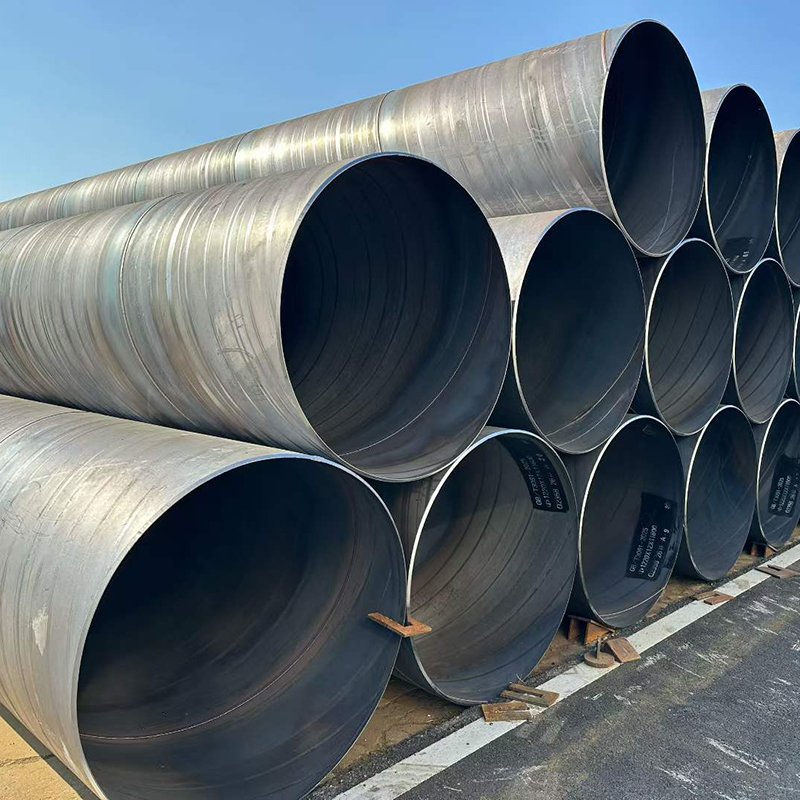
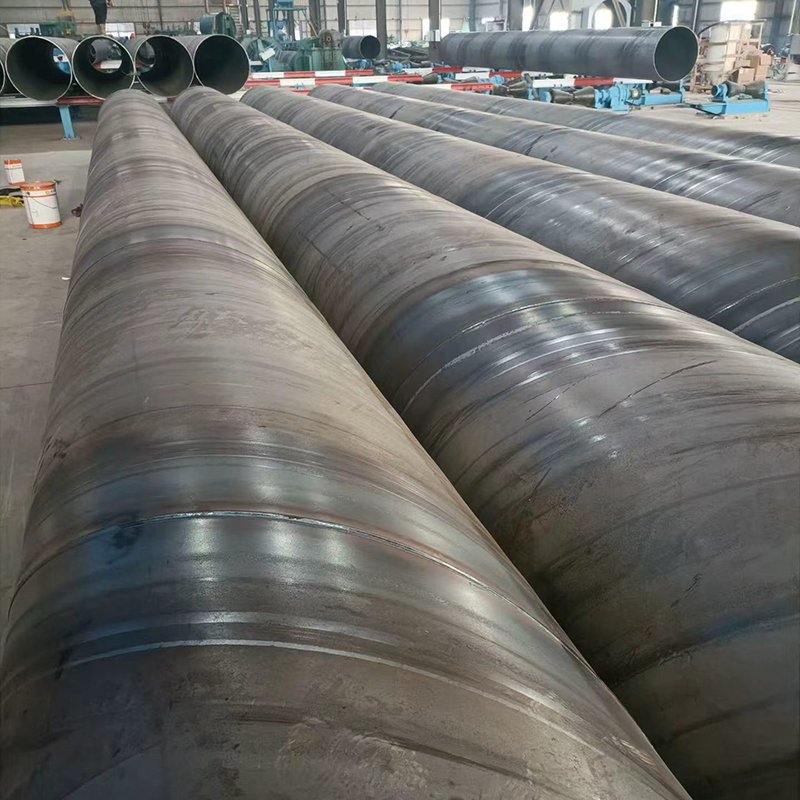
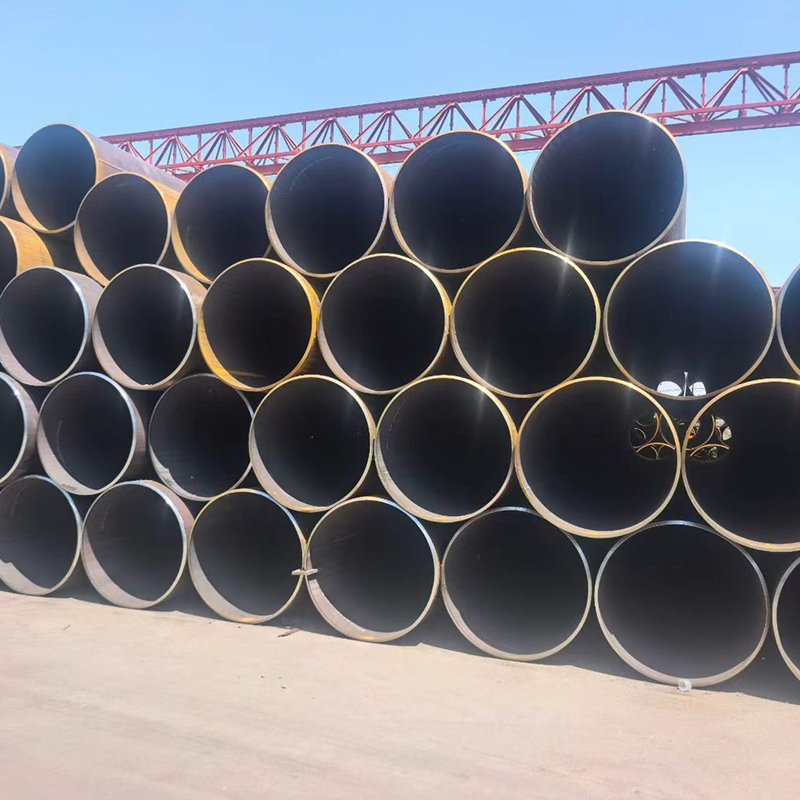
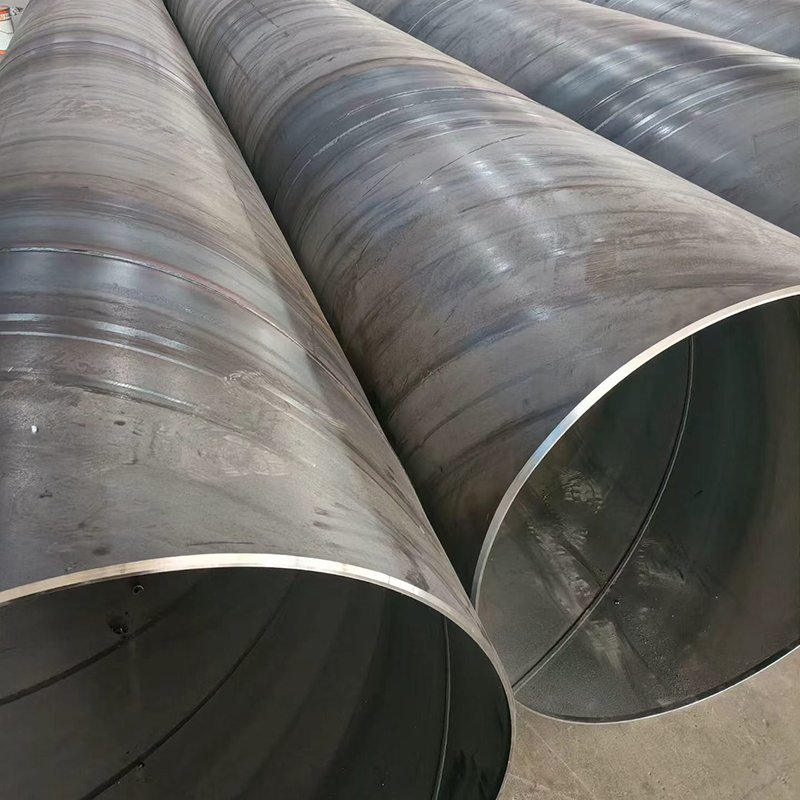
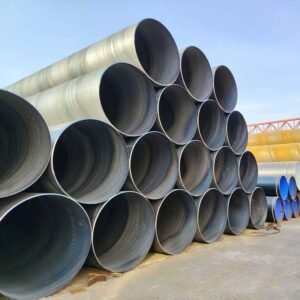
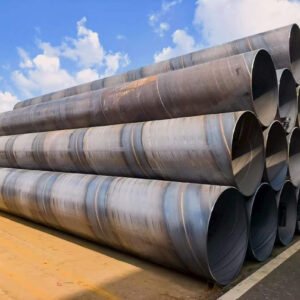
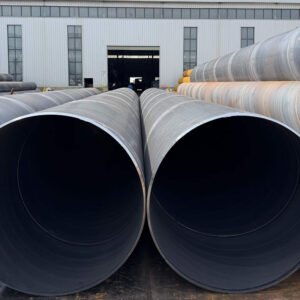
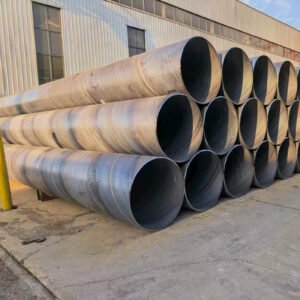
SSAW Steel Pipe
Quick Summary for Procurement: High-strength, cost-effective large-diameter steel pipes for water, oil, gas, and structural piling. Fully customizable in outer diameter (219mm – 3048mm) and wall thickness, with factory-applied 3PE/FBE anti-corrosion coatings. Fully compliant with API 5L, ASTM A252, AWWA C200, and EN 10217.
Product Description
I. Key Specifications & Manufacturing Capabilities
When selecting SSAW steel pipes for international infrastructure or oil & gas projects, technical parameters determine long-term performance and compliance. Below are our standard manufacturing tolerances and capabilities:
| Parameter | Standard Capability / Specification |
| Outer Diameter (OD) | 219.1 mm – 3048 mm (8″ – 120″) |
| Wall Thickness (WT) | 5.0 mm – 25.4 mm (SCH 20 – SCH 160 / STD / XS) |
| Length Options | 5.8m – 12.0m (Fixed length) / 18.0m – 24.0m (Single/Double Random Lengths) |
| Steel Grades (API 5L) | PSL1 / PSL2: Grade B, X42, X46, X52, X56, X60, X65, X70, X80 |
| Structural / Water Standards | ASTM A252 (Gr.1, Gr.2, Gr.3), AWWA C200, EN 10217-1, GB/T 9711, SY/T 5037 |
| Anti-Corrosion Coatings | 3PE / 3PP (DIN 30670), Single/Dual Layer FBE, Liquid Epoxy (AWWA C210), Coal Tar Epoxy |
| Pipe End Protections | Bevel ends ($30^\circ – 35^\circ$), Square cut, Fitted with plastic end caps / steel rings |
II. Primary Applications & Project Engineering Value
SSAW steel pipes are engineered for demanding environment applications where large volume, uniform pressure distribution, and structural stability are required.
1. Water Infrastructure & Municipal Engineering
-
Applications: City water supply mains, raw water transmission pipelines, sewage discharge, and desalination plants.
-
Key Advantage: Cost per meter is significantly lower than seamless or LSAW pipes for large diameters ($>\text{DN}500$).
-
Engineering Standard: AWWA C200 / DIN 30670.
-
Recommended Coating: Internal food-grade liquid epoxy or cement mortar lining + External 3PE coating for underground burial.
2. Oil & Gas Onshore and Offshore Pipelines
-
Applications: Long-distance natural gas transmission, crude oil trunklines, and slurry transport systems.
-
Key Advantage: High resistance to hoop stress due to the spiral seam angle, offering balanced stress distribution under high internal operating pressure.
-
Engineering Standard: API 5L PSL2 (X52 through X70).
-
Recommended Coating: Single or Dual-layer FBE / 3PE anti-corrosion coating.
3. Deep Foundation & Heavy Structural Piling
-
Applications: Port and jetty construction, bridge pier foundations, offshore wind turbine jacket piles, and high-rise building support columns.
-
Key Advantage: SSAW pipes can be produced in ultra-large diameters with long continuous lengths, reducing field welding joints on site.
-
Engineering Standard: ASTM A252 Grade 3 / EN 10219.
III. Why Choose SSAW Pipes over LSAW or Seamless Pipes?
Understanding the tradeoff between pipe types helps procurement managers optimize project budgets without sacrificing structural integrity:
| Feature / Comparison | SSAW Pipe (Spiral Welded) | LSAW Pipe (Longitudinal) | Seamless Pipe (SMLS) |
| Production Cost | Lowest (High yield rate) | High | Highest |
| Diameter Range | Medium to Ultra-Large (up to 3m+) | Medium to Large | Small to Medium (usually $\le 24″$) |
| Wall Thickness | Medium (up to 25.4mm) | Very Thick ($>25.4\text{mm}$) | Medium to Heavy Wall |
| Delivery Time | Fast (Continuous coil process) | Moderate | Moderate to Slow |
| Best Used For | Water mains, long-distance gas lines, piling | High-pressure off-shore oil/gas | Extreme high-pressure & temp boilers |
IV. Quality Control & Inspection Standards (MTC 3.1)
To ensure zero-defect delivery for international projects, every length of SSAW pipe undergoes rigorous Mill Testing and Quality Control:
-
Hydrostatic Testing: Every single pipe is tested to 100% hydrostatic pressure according to API 5L / AWWA C200 standards before coating.
-
Non-Destructive Examination (NDE):
-
100% Online Ultrasonic Testing (UT) for weld seam defects.
-
Radiographic Testing (X-Ray / RT) for pipe ends and repaired seams.
-
-
Dimensional Checks: Out-of-roundness, wall thickness, pipe length, bevel angle, and straightness verification.
-
Coating Inspection: Holiday testing (pinhole detection), adhesion pull-off testing, and coating thickness measurement.
-
Documentation: Full EN 10204 3.1 Mill Test Certificates (MTC) provided with complete heat number, chemical composition, and mechanical test results (tensile, yield, impact test). Third-Party Inspections (SGS, BV, Intertek, TUV) welcomed.
V. Packaging, Container Loading & Ocean Logistics
Proper packaging and loading prevent costly damage during ocean transit (especially under break-bulk shipping or multi-country transshipment):
-
Pipe End Protection: Plastic internal plug caps or steel protective rings wrapped with stretch film to prevent bevel damage and rust.
-
Container Shipping Optimization:
-
20ft GP Container: Pipe lengths controlled at 5.80 meters for smooth loading and unloading.
-
40ft GP/HC Container: Pipe lengths controlled at 11.80 meters.
-
Nesting Strategy: Smaller diameter pipes nested inside larger diameter pipes to minimize ocean freight costs per metric ton.
-
-
Break-Bulk Cargo: For large volume or oversized diameter orders ($>28″$), pipes are secured with PET/Steel strapping, lifting belts, and wooden dunnage to avoid deformation during loading/unloading at ports.
Related Products