The hydrostatic test is the last gate a steel water pipe passes before it leaves the mill, and often the first document an owner asks for when a shipment arrives. Yet it is frequently reduced to a single line on a quotation — hydrostatic test included — with no statement of the governing standard, the test pressure basis, the holding time or the record format. On municipal water transmission projects in Southeast Asia, where pipe may travel by sea, transfer to a barge and be lifted a second time at site, that missing detail matters. A mill test proves the pipe body and weld were sound at the factory. It says nothing about the girth welds made in the field, the lining restored at those joints, or the coating repaired after handling. This article sets out what the test actually covers, which documents to require, and how to write the requirement into the technical agreement so the mill record and the field record form one chain.
I. What the Mill Hydrostatic Test Actually Verifies
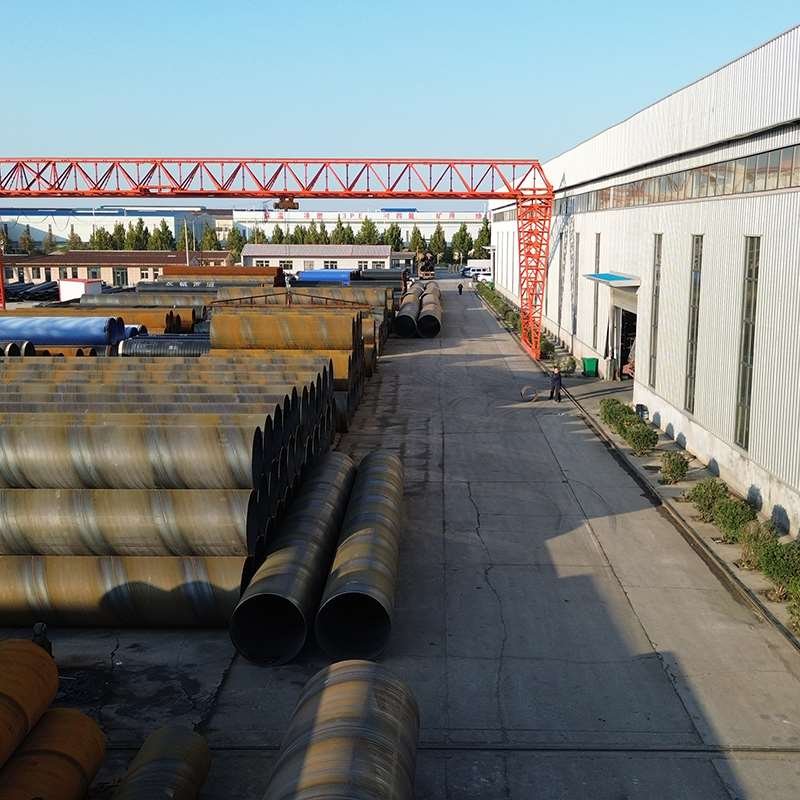
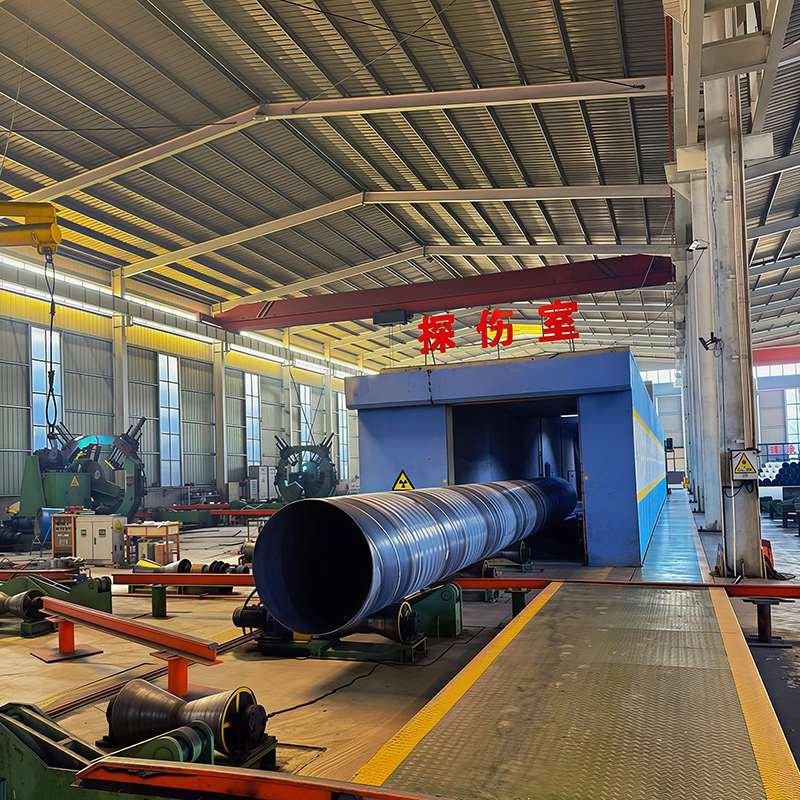
During production each pipe is filled with water, pressurised to the level defined by the governing standard and held for a specified period while the seam and the pipe body are examined for leakage or visible distortion. The test checks the integrity of the pipe body and the longitudinal weld under pressure. It is a factory acceptance test, not a design calculation, and not a substitute for the pressure test performed on the installed line. For spiral welded pipe the result also reflects the consistency of the forming and welding operation, which is why buyers often ask for the record to be tied to a specific pipe number rather than issued as a batch summary.
What it does not cover is equally important: the girth welds made during laying, the cement mortar lining restoration at those joints, the external field joint coating, or damage introduced during ocean freight, port handling and barge transfer. Treating a mill certificate as proof that the installed line is watertight is one of the most common specification gaps on imported water mains.
II. The Standard Basis Must Be Named Before Quoting
On AWWA-based water projects the reference is normally AWWA C200 for steel water pipe together with AWWA M11 for design and installation, with AWWA C206 covering field welding. The project specification should state the edition; a C200-23 and an older edition are not interchangeable in their test and documentation details. Where the owner works from an ASTM or ASME-based package, confirm which document governs the acceptance clause, because two systems quoted in one clause usually produce two different interpretations at handover
The technical agreement needs to fix four things: the governing standard and edition, the basis for the test pressure, the holding period, and the format of the record for each pipe. Each record should be traceable to a pipe number and heat number so that the MTC, the hydrostatic test result, the NDT report and the coating records can be audited as one set. On ADB- or World Bank-funded packages this traceability is commonly checked line by line by the engineer.
III. Mill Test and Field Test Are Two Separate Records
After installation the completed section is filled and tested again. This field test verifies the field welds, joints, valves and restored lining — the parts the mill never saw. Who performs it, who witnesses it, which acceptance criterion applies, and what happens when a section fails all belong in the Inspection and Test Plan (ITP), not in a footnote to the quotation. The ITP should also state how the internal lining is closed at each girth weld and whether CCTV or another acceptance record is required afterwards.
A practical sequence for an island water project is: coating and lining records at the mill, hydrostatic and NDT records per pipe, pre-shipment inspection with the nominated agency, a condition check after each barge transfer, then the field test after laying and joint restoration. Every step needs a named responsible party and a signed record. If the EPC contractor applies the joint coating while the supplier issues the mill records, that boundary must appear in the same document.
IV. Southeast Asian Conditions That Change the Test Plan
Three regional factors deserve explicit treatment. First, monsoon construction windows are short, so a field test requiring a long hold and an open trench may need to be planned in sections rather than across the whole line. Second, coastal and low-lying alignments bring high groundwater and flotation risk while the line is empty or partly filled; the buoyancy check should cover the construction stage as well as operation. Third, island logistics add transhipment and a second lift, and any coating damage found after those steps needs a repair and re-test entry linked back to the original pipe number.
V. Specification Checklist for Buyers
| Item | What to state in the technical agreement | Reference | Common gap |
|---|---|---|---|
| Governing standard | Named standard and edition for pipe, testing and field welding | AWWA C200 / M11 / C206 | Standard named without edition |
| Test pressure basis | How the mill test pressure is derived for the specified pipe | Owner specification | Only test included stated |
| Record format | Per-pipe record with pipe number, heat number and witness signature | MTC + ITP | Batch summary instead of per-pipe |
| Field test | Responsibility, acceptance criterion and sectioning plan | ITP | Assumed covered by mill test |
| Joint restoration | Lining repair method and acceptance record at girth welds | AWWA C205 / C206 | Not priced or assigned |
| Transport damage | Inspection after each transfer and repair/re-test entry | Shipping plan + ITP | No check between barge legs |
VI. Project Experience: Records That Survived Handover
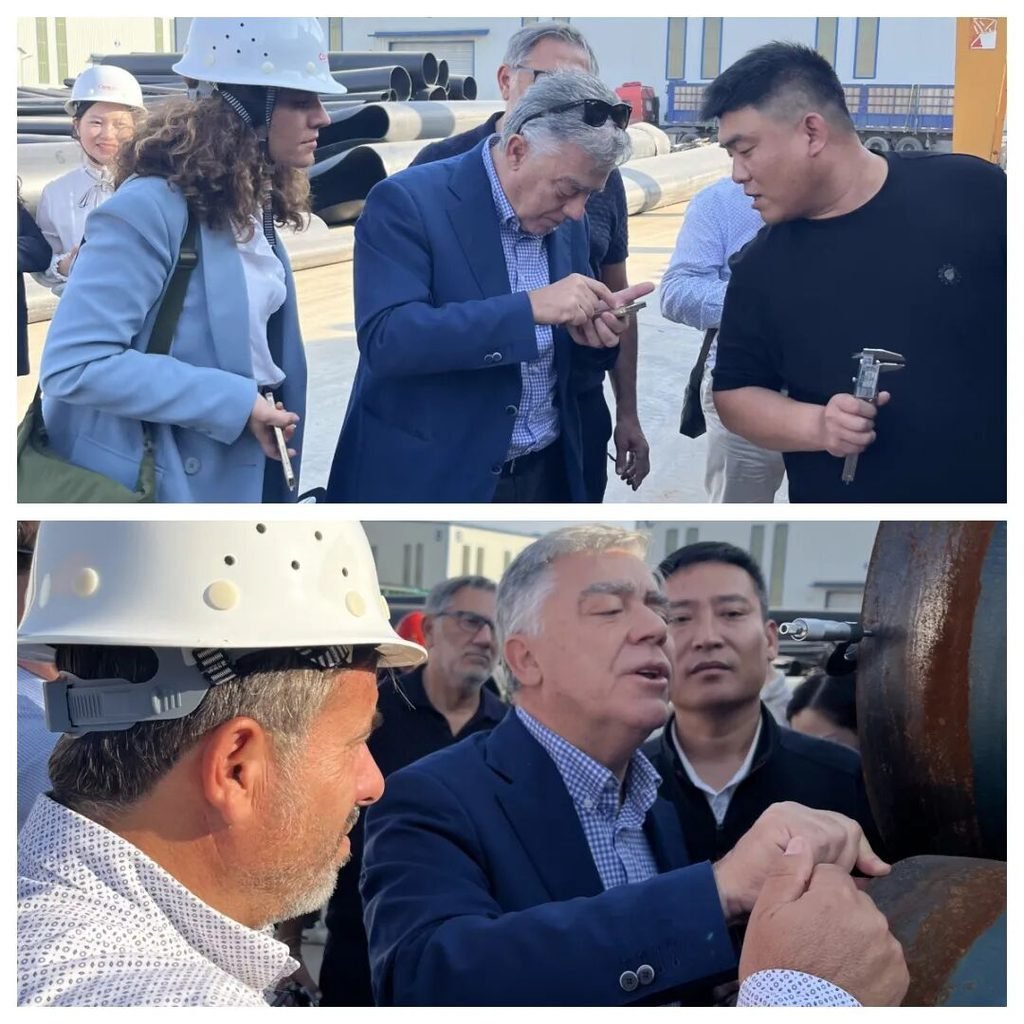
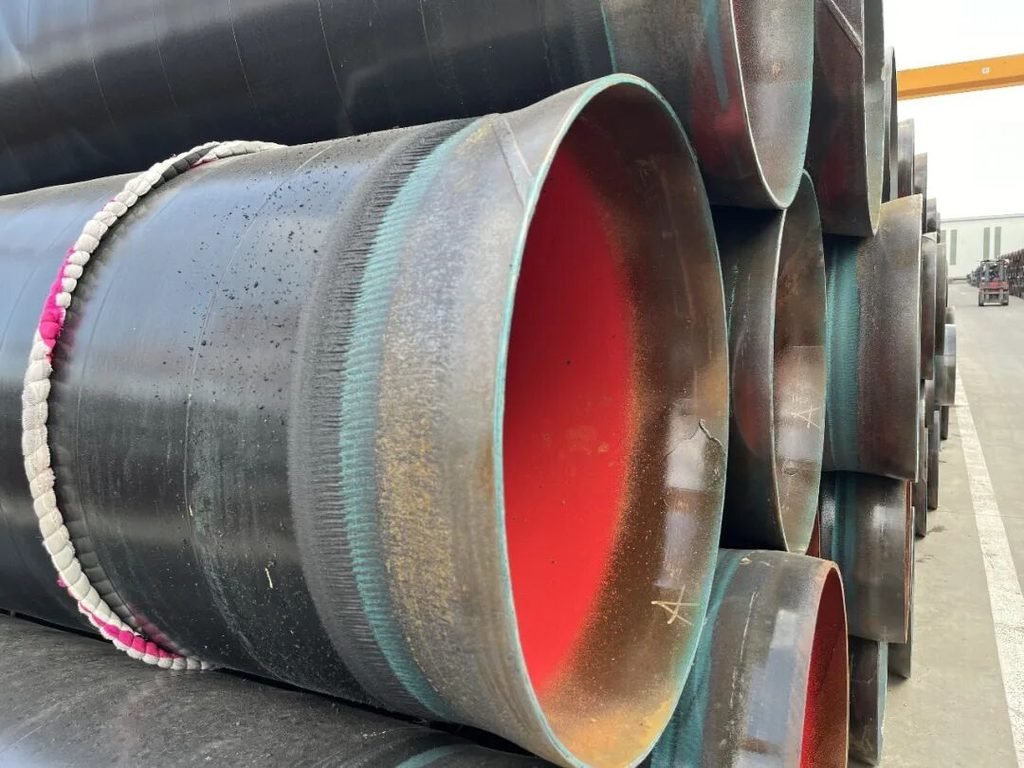
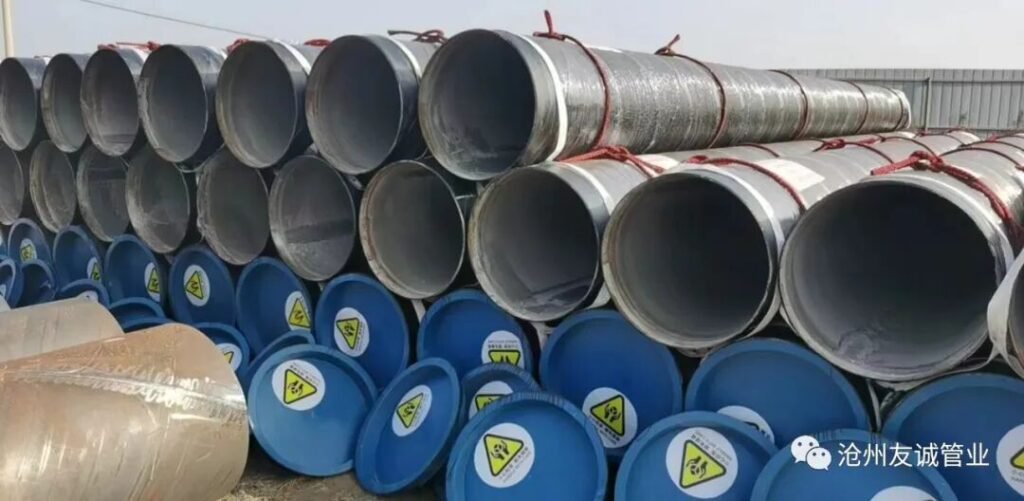
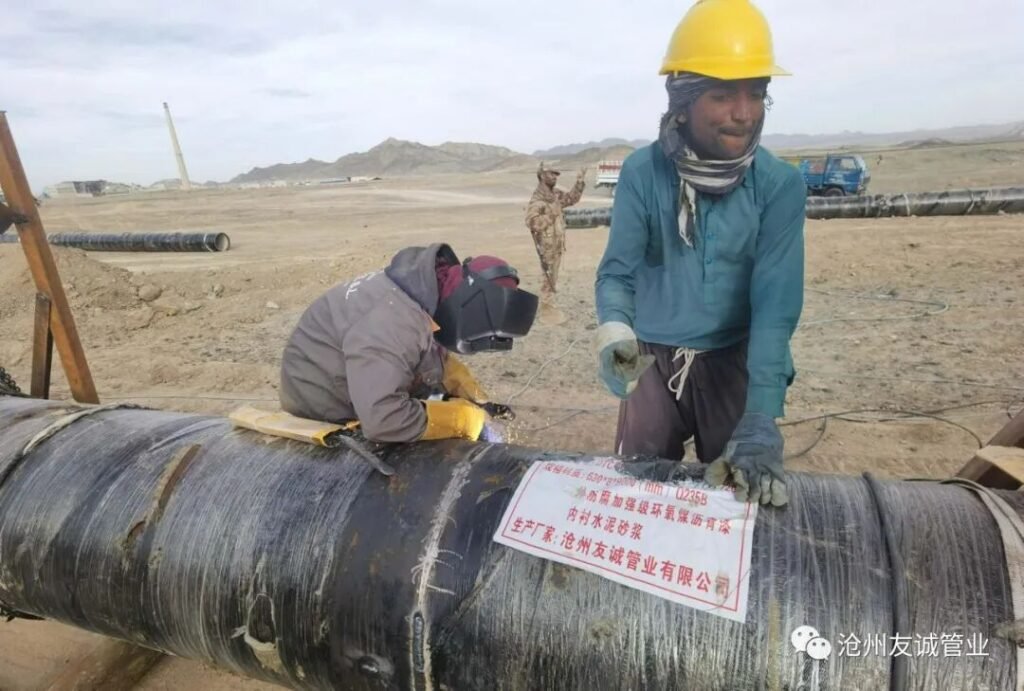
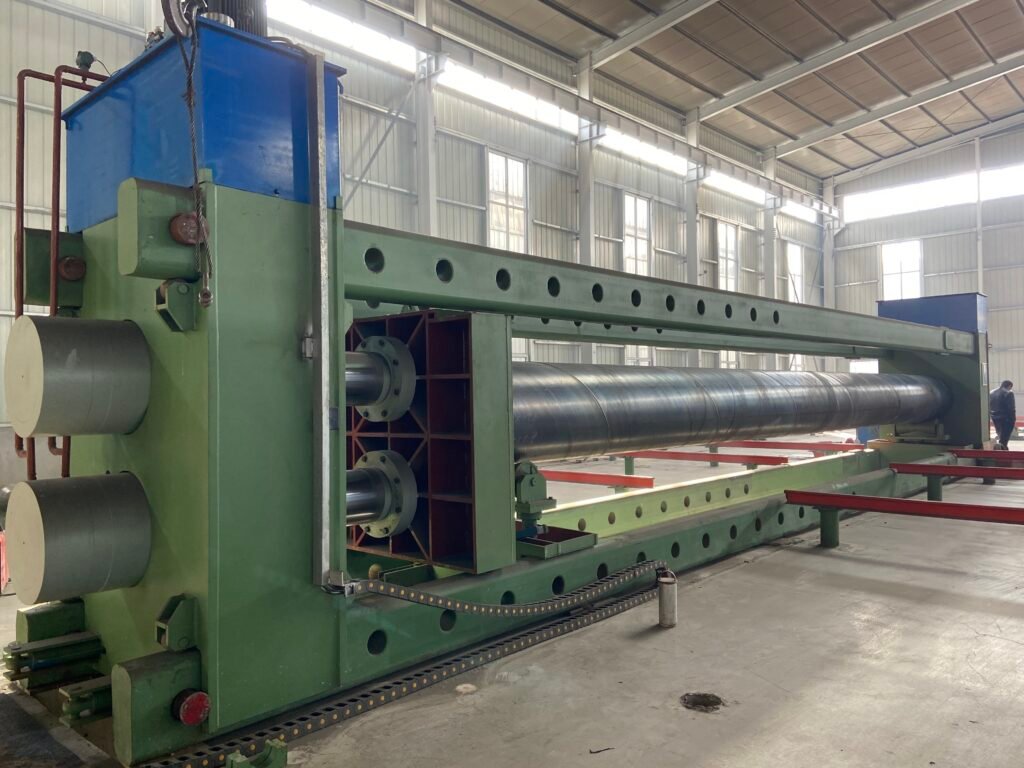
Experience on long water transmission lines shows why the record chain matters. For the Saindak copper-gold project water line in Pakistan, Youcheng supplied more than 38,000 m of DN600 spiral welded steel pipe in 9 m lengths, with cement mortar lining internally and coal-tar epoxy protection externally — a combination that calls for both lining and coating records to be issued per pipe. On a TPEP export package to Europe, the owner, engineer, contractor, purchaser and our factory carried out a joint mill inspection and signed the acceptance documents at the plant before the goods were collected for shipment in early 2025. For the Chengdu Universiade supporting water plant, DN1400 coated composite pipe was delivered together with coated flanges, elbows, tees, crosses and reducers, with no quality issues recorded at handover.
VII. Summary
A hydrostatic test is only as useful as the record and responsibility chain behind it. Define the standard edition, the per-pipe records, the ITP witness points and the field test in one technical agreement, and the production, shipping and site teams will be working to a single acceptance baseline. Youcheng supplies spiral welded steel pipe from OD 219 mm to 3800 mm with mill hydrostatic and NDT records and third-party inspection support. For water mains, see our cement mortar lined steel pipe range, and for buried external protection our 3PE coated SSAW steel pipe. Project-specific test and documentation matrices are available through our contact page.