In modern infrastructure construction, pipelines must not only possess extremely high structural strength but also have an exceptionally long corrosion-resistant service life.
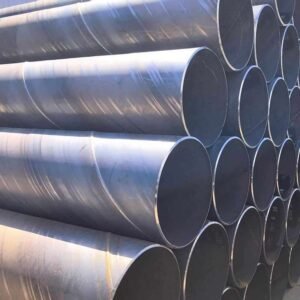
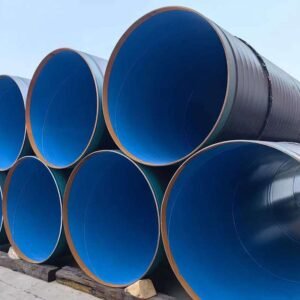
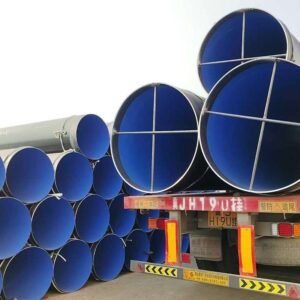
3PE anti-corrosion spiral-welded steel pipes (also known as 3PE SSAW pipes) have become the material of choice for oil, natural gas, and water conservancy projects worldwide due to their cost-effectiveness and exceptional protective performance in large-diameter transmission applications.
This guide will provide you with an in-depth understanding of why combining 3PE anti-corrosion technology with the spiral-welding process is currently the optimal solution for long-distance transmission pipelines.
I. What Are 3PE Anti-Corrosion Spiral-Welded Steel Pipes?
3PE anti-corrosion spiral-welded steel pipes represent the perfect combination of two advanced engineering technologies:
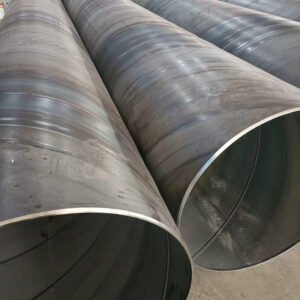
- SSAW (Spiral Submerged Arc Welded Steel Pipe): This is a manufacturing process. By rolling steel strips at a specific spiral angle and performing submerged arc welding, large-diameter steel pipes can be produced using relatively narrow steel strips.
- 3PE (Three-Layer Polyethylene Corrosion Protection): This is a coating technology. It consists of a base layer of epoxy powder (FBE), an intermediate adhesive layer (AD), and an outer layer of polyethylene (PE), forming an impenetrable protective system.
II. SSAW Spiral Welded Steel Pipe Manufacturing Process: Precision and Efficiency
The term “spiral” in “spiral welded steel pipe” derives from its unique welding path. Unlike longitudinally seam-welded steel pipes (LSAW), spiral pipes are manufactured by continuously rotating and welding steel strips in a forming machine.
Core Production Processes:
- Uncoiling and Leveling: The raw material steel coil is uncoiled and flattened to ensure uniform wall thickness.
- Edge Milling: The edges of the steel strip are precision-milled to ensure the seam gap meets standards during welding.
- Spiral Forming: The steel strip enters the forming machine and is bent into a cylindrical shape according to a preset forming angle.
- Internal and External Submerged Arc Welding: Automatic submerged arc welding technology is used for both internal and external welds. The welds are protected by flux deep within the weld, ensuring high weld strength and excellent sealing.
- Non-Destructive Testing: Each steel pipe undergoes ultrasonic and X-ray testing to ensure the welds are free of porosity and cracks and comply with international standards such as API 5L.
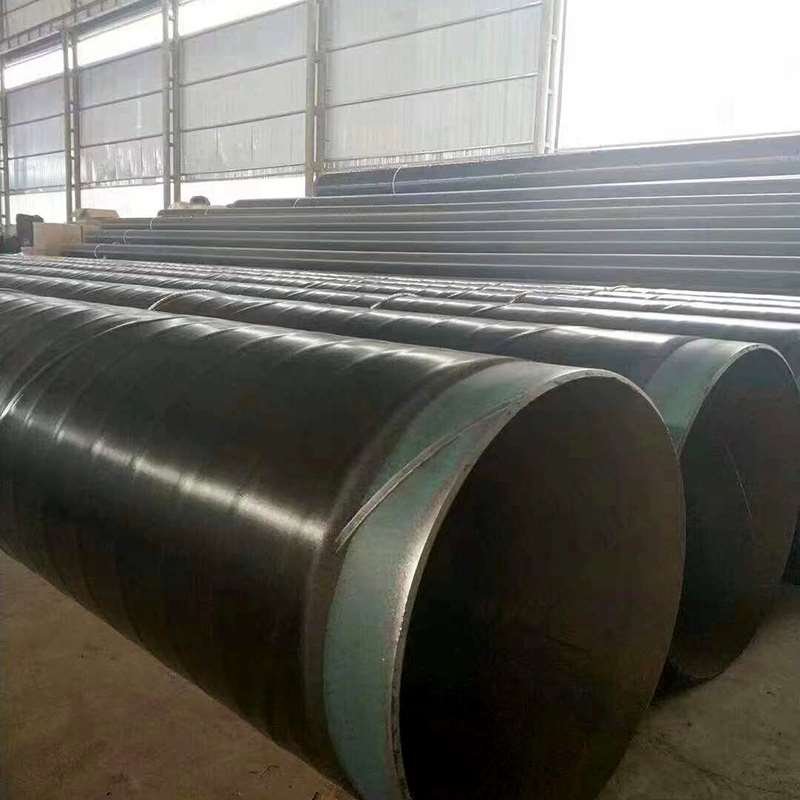
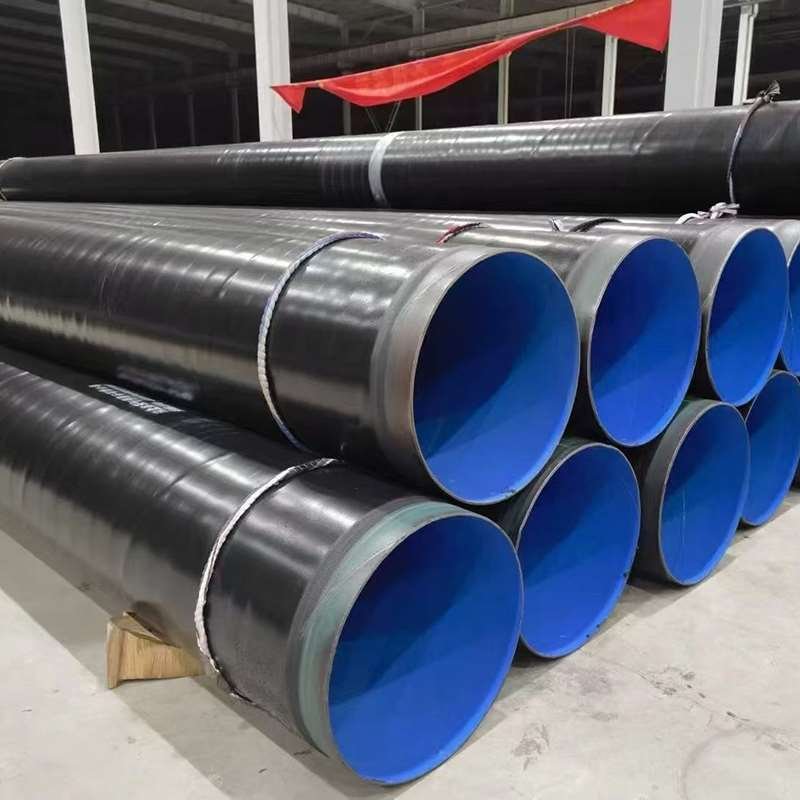
III. Scientific Principles of 3PE Anti-Corrosion Coatings
When a spiral-welded steel pipe is coated with a 3PE coating, it evolves from an ordinary steel pipe into a multi-layer protective system:
- Step 1: Surface Preparation: The steel pipe must undergo shot blasting to remove rust and achieve a Sa 2.5 cleanliness grade. This not only removes scale but also creates an “anchor pattern,” allowing the coating to adhere more firmly.
- Step 2: Heating and Coating: The steel pipe is heated to a specific temperature, and epoxy powder (the corrosion-resistant core), an adhesive (the bonding layer), and extruded polyethylene (the mechanical protective layer) are applied in sequence.
- Step 3: Cooling and Electrical Spark Testing: After the coating is water-cooled and set, it must pass high-voltage electrical spark testing to ensure the coating is free of any pinholes invisible to the naked eye.
IV. Key Advantages of the Combination of SSAW and 3PE
Why do large-diameter projects always specifically request “3PE spiral-welded pipes”?
1. Unmatched Cost-Effectiveness for Large Diameters
- The spiral-welding process allows for the manufacture of pipes with enormous diameters (up to 3,000 mm or more) using relatively narrow steel plates. Compared to straight-seam pipes, this significantly reduces raw material and processing costs, making it the optimal choice for large-scale water and gas transmission networks.
2. Exceptional Mechanical Strength
- The orientation of the spiral weld seam enhances the pipe’s ability to withstand internal pressure. Combined with the toughness of the 3PE outer coating, the steel pipe maintains structural integrity—without easily deforming—even during underground installation, soil settlement, or when subjected to external impacts.
3. Maintenance-Free Service Life of Over 50 Years
- The 3PE coating acts as an impenetrable barrier. While the steel provides strength, the 3PE coating ensures that acids, alkalis, moisture, and microorganisms can never come into contact with the metal surface, eliminating rust at its source and significantly reducing long-term operating costs.
4. Adaptability to Harsh Environments
- Whether in highly saline desert soils in the UAE or Saudi Arabia, or in marshy areas of cold regions, the 3PE anti-corrosion coating maintains stable performance between -45 °C and 80 °C without becoming brittle or peeling off.
V. Major Applications
- Long-distance Oil and Gas Pipelines: High-pressure oil and gas trunk lines spanning national borders and regions.
- Urban Water Supply Systems: Large-diameter water distribution and municipal sewage systems.
- Thermal Power Generation and Dredging: Power plant circulating water pipes and port dredging projects.
- Pile Foundations and Construction: Structural support piles in corrosive marine environments.