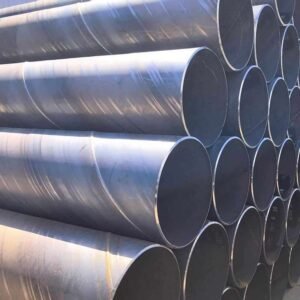
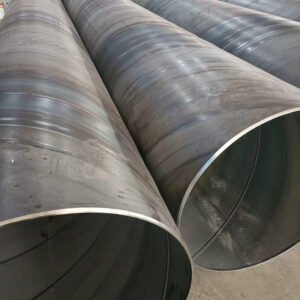
In modern infrastructure construction, spiral submerged-arc welded (SSAW) steel pipes are widely used in long-distance pipeline projects for water supply and drainage, as well as natural gas and oil transportation.
Due to differences in the physical and chemical properties of the transported media, water pipeline projects and oil pipeline projects have different requirements for the material, standards, and anti-corrosion processes of spiral steel pipes.
Choosing the wrong type of anti-corrosion treatment can, at best, shorten the service life of the pipeline network and lead to frequent maintenance; at worst, it can cause leaks, resulting in severe economic losses and environmental pollution.
This article will provide a detailed analysis of how to scientifically and accurately select the appropriate corrosion-resistant spiral-welded steel pipes for water and oil pipeline projects.
I. Water Pipeline Projects: Focus on “Sanitary Performance” and “Resistance to Water Vapor Permeation”
Water pipeline projects primarily include urban tap water distribution, industrial circulating water, wastewater discharge, and agricultural irrigation. Since water is the main medium, these systems are prone to electrochemical and microbial corrosion; furthermore, strict environmental and toxicity regulations apply when transporting drinking water.
i. Recommended Corrosion Protection Solutions
1. TPEP Corrosion Protection
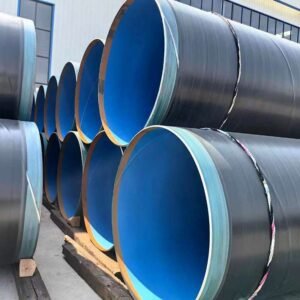
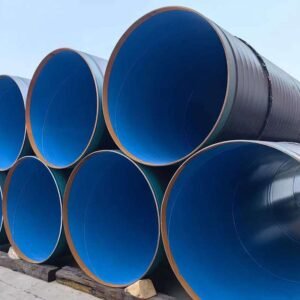
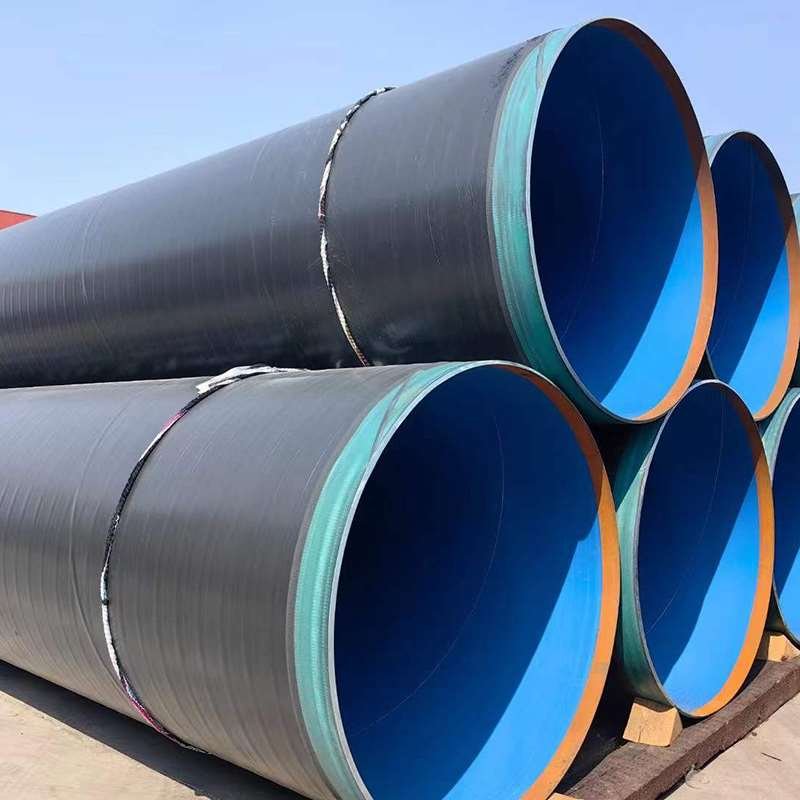
- Features: This is currently the most effective combination for water supply and drainage projects. The outer wall uses 3PE (three-layer polyethylene) coating, which offers strong resistance to mechanical damage; the inner wall uses fusion-bonded epoxy powder (FBE), resulting in a smooth coating that prevents scaling and microbial growth, with a low hydraulic resistance coefficient.
- Applications: Long-distance municipal drinking water trunk lines and inter-basin water transfer projects.
2. Internal and External Epoxy Resin Corrosion Protection (IPN8710 / Drinking Water-Grade Epoxy)
- Features: IPN8710, a corrosion-resistant coating specifically designed for drinking water, offers excellent adhesion and is non-toxic. Through multiple coats, it forms a dense protective film on the inner wall of the steel pipe.
- Applications: Small- and medium-sized municipal water supply networks; municipal reclaimed water reuse networks.
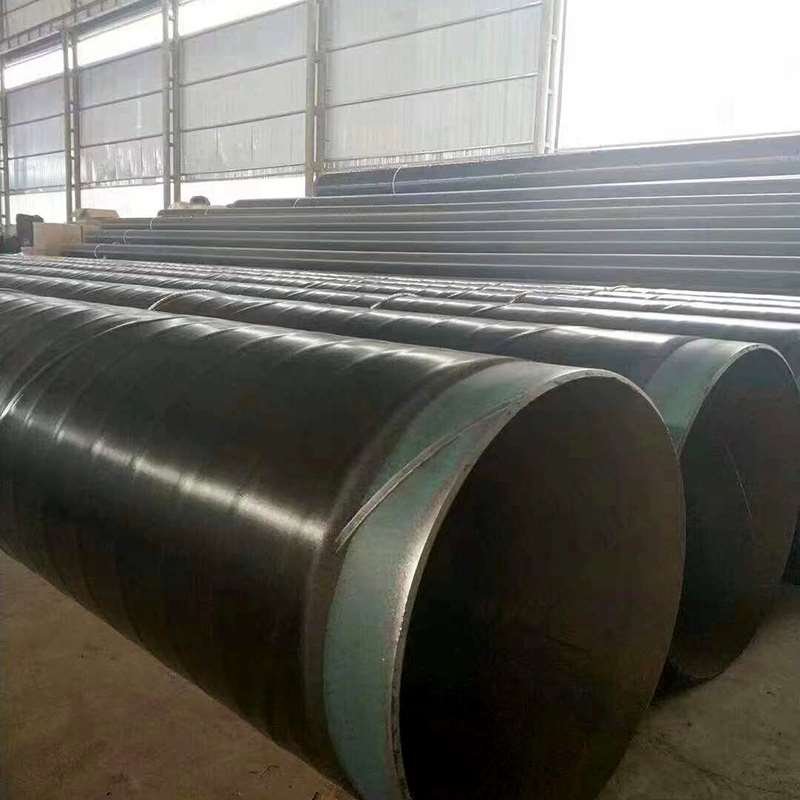
3. Cement Mortar Lining + Epoxy Coal Tar/3PE Exterior Coating
- Features: Cement mortar lining is a time-tested corrosion protection method that is cost-effective and forms a passivated protective layer through the hydration reaction of cement.
- Applications: Large-scale sewage pipelines; raw water (transportation of untreated river/lake water) projects.
ii. Selection of Steel Pipe Base Materials
- Commonly Used Standards: In China, GB/T 9711 or SY/T 5037 (standards for general-purpose fluid conveyance pipelines) are typically followed.
- Common Materials: Q235B, Q355B. For low-pressure water pipes, Q235B offers the best cost-performance ratio; if water hammer pressure is high or the pipe diameter is large, Q355B should be selected to increase yield strength.
II. Oil Pipeline Engineering: Focus on “High-Pressure and High-Temperature Resistance” and “Leak Prevention”
Oil and natural gas transmission pipelines are high-pressure, high-risk projects. Oil and gas often contain hydrogen sulfide (H₂S), carbon dioxide (CO₂), and high-salinity water, which can easily cause acid corrosion and stress corrosion cracking in steel pipes. Therefore, the requirements for corrosion protection in oil pipeline engineering have risen to the level of national security.
i. Recommended Corrosion Protection Solutions
1. 3PE Corrosion Protection (Three-Layer Polyethylene Coating)
- Structure: The base layer consists of fusion-bonded epoxy powder (FBE ≥ 100 μm), the intermediate layer is an adhesive (AD), and the outer layer is polyethylene (PE).
- Advantages: Combines the high adhesion and chemical resistance of epoxy powder with the resistance to mechanical damage, water resistance, and waterproofing properties of polyethylene. It is widely recognized as the protective coating for buried oil and gas pipelines, with a service life of up to 50 years.
- Applications: Crude oil transmission, long-distance natural gas pipelines, and main trunk lines of refined oil distribution networks.
2. FBE Corrosion Protection (Single- or Double-Layer Fusion-Bonded Epoxy Powder)
- Features: Dense coating, excellent resistance to cathodic disbonding, and good temperature resistance.
- Applications: Internal oilfield gathering and transportation pipelines, casing pipes, and directional drilling crossings (double-layer FBE offers strong scratch resistance).
ii. Selection of Steel Pipe Substrates
Oil and gas pipelines place extremely high demands on the toughness and strength of the substrate and cannot be treated the same as ordinary water pipes.
- General Standards: Strict compliance with GB/T 9711 or the international standard API Spec 5L.
- Common Steel Grades: X42, X52, X60, X70, etc. (or L290, L360, L415). The higher the steel grade, the greater the steel pipe’s pressure-bearing capacity and fracture toughness; selection must be calculated and matched based on the design pressure (typically high pressure ≥ 1.6 MPa, or even ≥ 4.0 MPa).
III. Four Key Principles for Selecting Corrosion-Resistant Spiral-Welded Steel Pipes
Whether your project involves water or oil, you should follow these four steps when purchasing and selecting the appropriate pipes:
| Evaluation Criteria | Water Pipeline Project Inspection Points | Oil Pipeline Project Inspection Points |
|---|---|---|
| 1. Operating Pressure | For low-pressure applications, pipes compliant with SY/T 5037 may be considered where permitted by the project specifications. Higher-pressure applications require pipes meeting GB/T 9711, with the grade and wall thickness selected according to design requirements. | GB/T 9711 or API 5L is commonly specified, depending on the project and applicable regulations. Wall thickness and steel grade must be carefully calculated based on the design pressure and operating conditions. |
| 2. Installation Environment | For buried pipelines, 3PE or TPEP coatings are commonly used. For above-ground pipelines, UV protection should be considered, often with a polyurethane topcoat where appropriate. | Most pipelines are buried, and 3PE is a widely used external coating system. For crossings or corrosive soil conditions, compatibility with the cathodic protection system requires careful evaluation. |
| 3. Hygiene and Safety | For drinking-water pipelines, verify the required drinking-water hygiene approvals and ensure that internal coating materials are suitable for potable water and do not release harmful substances. | Evaluate resistance to the transported medium and operating conditions. Depending on the application, internal coatings may also be selected to reduce friction or meet specific electrical requirements. |
| 4. Construction and Cost | Where budgets are limited, coating systems such as coal tar epoxy may be considered for sewage or industrial water pipelines, provided they meet project specifications and applicable environmental requirements. | Safety must take priority over cost reduction. The coating system should undergo holiday detection testing before shipment in accordance with the applicable coating specification and acceptance criteria. |