In actual procurement, many engineers and procurement professionals face a key question: Should they choose welded steel pipes or seamless steel pipes?
Essentially, this question isn’t about “which is better,” but rather which is more suitable, cost-effective, and safer under different operating conditions.
This article will help you make a clear decision by examining four key aspects: manufacturing process, performance, cost, and application scenarios.
I. Fundamental Differences in Production Processes
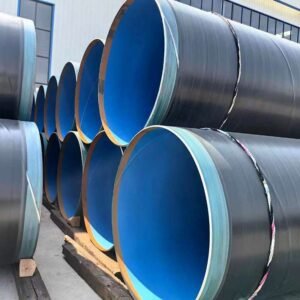
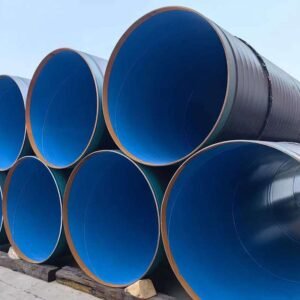
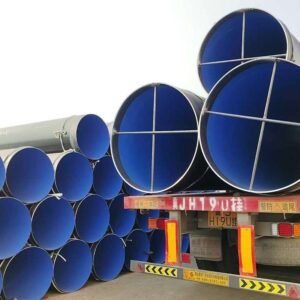
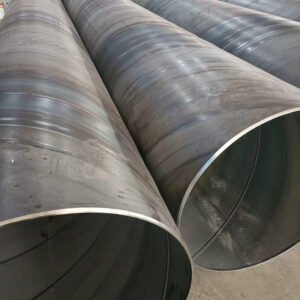
1. Welded Steel Pipe
Production Method:
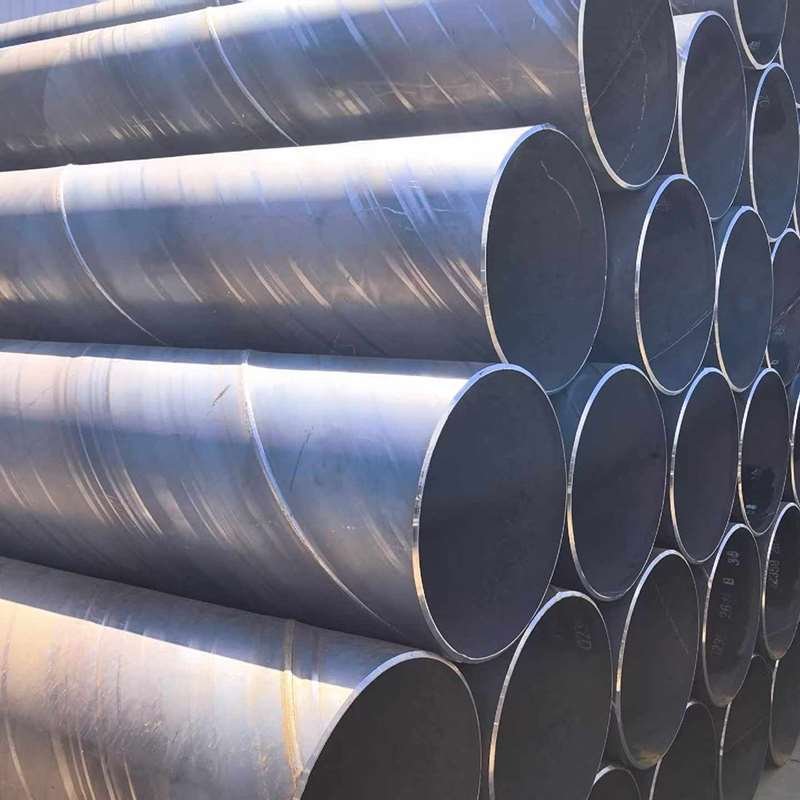
- Uses steel strip or steel plate as raw material
- Rolled into a circular tube using a forming machine
- Joined via high-frequency welding (ERW) or submerged arc welding (LSAW/SSAW)
Key Characteristics:
- Contains a weld seam (a potential weak point)
- High production efficiency
- More precise dimensional control (especially outer diameter)
2. Seamless Steel Pipe
Production Method:
- Uses round steel billets as raw material
- Formed directly into a hollow structure through piercing (hot rolling/cold drawing)
- No welds throughout the entire length
Key Characteristics:
- Weld-free structure with high structural integrity
- Suitable for high-pressure and high-temperature operating conditions
- Higher cost
II. Performance Comparison
| Comparison Criteria | Welded Steel Pipe | Seamless Steel Pipe |
|---|---|---|
| Strength | High, but weld quality is a critical factor | Depends on the steel grade and manufacturing process; generally uniform without a weld seam |
| Pressure Resistance | Depends on the steel grade, wall thickness, weld quality, and applicable standard | Suitable for high-pressure systems when designed and specified accordingly |
| Corrosion Resistance | Depends on the material and coating | Also depends on the material; no inherent difference solely due to the manufacturing method |
| Dimensional Accuracy | Generally good, with good control of outside diameter | Depends on the manufacturing process; wall thickness variation may occur |
| Surface Quality | Generally consistent, depending on the manufacturing process and finishing | May have surface scale or defects, depending on the manufacturing process |
| Safety | Depends on weld integrity, inspection, and compliance with applicable standards | Depends on material quality, manufacturing quality, inspection, and compliance with applicable standards |
III. Comparison of Prices, Costs, and Lead Times
| Comparison Criteria | Welded Steel Pipe | Seamless Steel Pipe |
|---|---|---|
| Price | Lower (reduced material and manufacturing costs) | Higher (often 20%–50% higher, depending on specifications and market conditions) |
| Raw Material Utilization | High | Lower (material loss may occur during piercing and forming) |
| Production Efficiency | High (suitable for continuous production) | Generally lower |
| Lead Time | Shorter (stock availability is often better for common specifications) | Often longer (production scheduling may be required) |
| Customization | High (flexible sizing options) | More limited, depending on available sizes and manufacturing capabilities |
Purchasing Recommendations:
Budget-sensitive projects → Prioritize welded pipes
Projects with high safety requirements → Prioritize seamless pipes
IV. Selection Recommendations for Different Application Scenarios
1. Pressure Pipelines (e.g., oil and gas, steam)
| Operating Conditions | Recommendation |
|---|---|
| Low Pressure (≤ 2.5 MPa) | Welded Steel Pipe (e.g., ASTM A53) |
| Medium Pressure (2.5–10 MPa) | Welded or Seamless Steel Pipe, depending on safety requirements and applicable standards |
| High Pressure (> 10 MPa) | Seamless Steel Pipe (e.g., ASTM A106 Grade B or alloy steel pipe), subject to design requirements |
2. Structural use (construction, support)
| Application | Recommendation |
|---|---|
| Steel Structures | Welded Steel Pipe (Q235 / Q345) |
| Bridges / Load-Bearing Structures | High-Strength Welded Steel Pipe or Seamless Steel Pipe |
| Scaffolding | Standard Welded Steel Pipe (e.g., Ø48.3 mm) |
3. Fluid Conveyance (Water Supply and Drainage, Industrial)
| Fluid / Medium | Recommendation |
|---|---|
| Water, Air | Welded Steel Pipe |
| Oil and Gas | Seamless Steel Pipe or High-Quality Welded Steel Pipe |
| Corrosive Media | Select suitable materials and corrosion protection (e.g., stainless steel or anti-corrosion coatings) |
4. Fire Protection and Municipal Engineering
Commonly Used: Welded steel pipes (e.g., ASTM A53, galvanized pipes)
Reasons:
Low cost
Stable supply
Compliance with codes is sufficient
V. Summary of Quick Selection Guidelines
Give priority to welded steel pipes if:
- Budget is limited
- Low-pressure or standard projects
- Large quantities and fast delivery are required
Seamless steel pipes must be selected if:
- High pressure / high temperature / hazardous media
- Extremely high safety requirements (e.g., petroleum, chemical industries)
- Specifications explicitly require seamless pipes