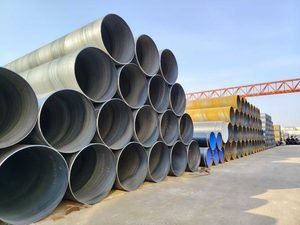
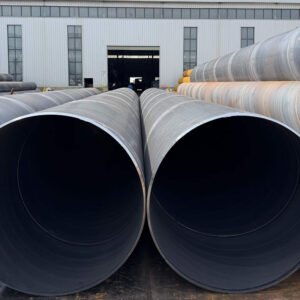
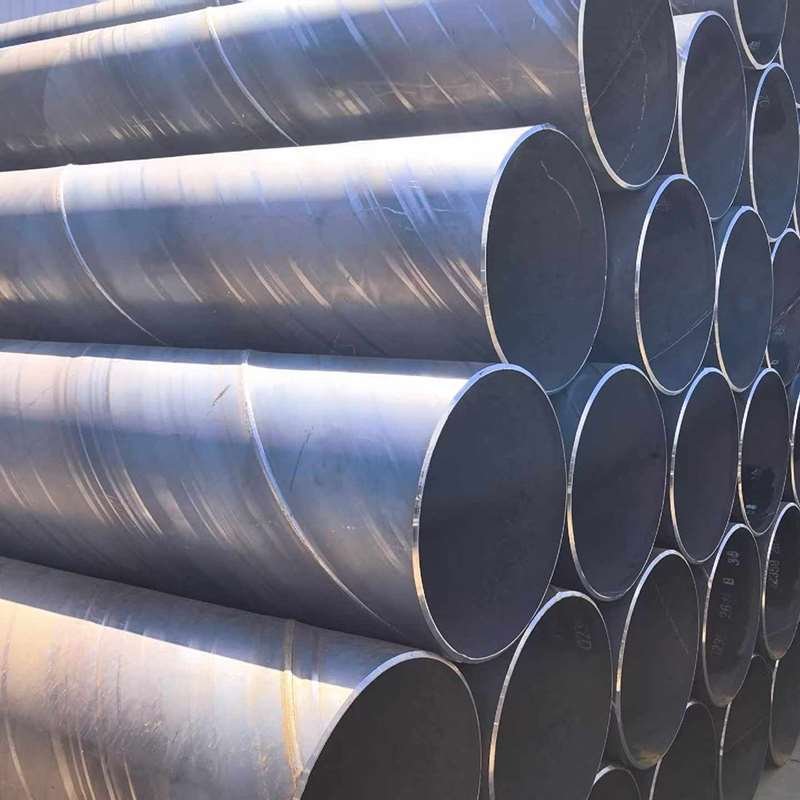
Spiral welded pipe — usually written SSAW or HSAW, for spiral or helical submerged arc welded — is made by forming steel coil into a helix and welding the resulting seam from both sides. It is the workhorse material for large-diameter water transmission mains, raw water lines, cooling water circuits and structural piling. The reason is not that it is stronger in every respect than other pipe types, but that it can be produced economically across an outer diameter range that seamless and longitudinal welded routes cannot cover. For municipal water projects in Southeast Asia, understanding both the advantage and the limits of the route is what turns a diameter on a drawing into a specification that can actually be built, shipped and commissioned.
I. How the Pipe Is Made
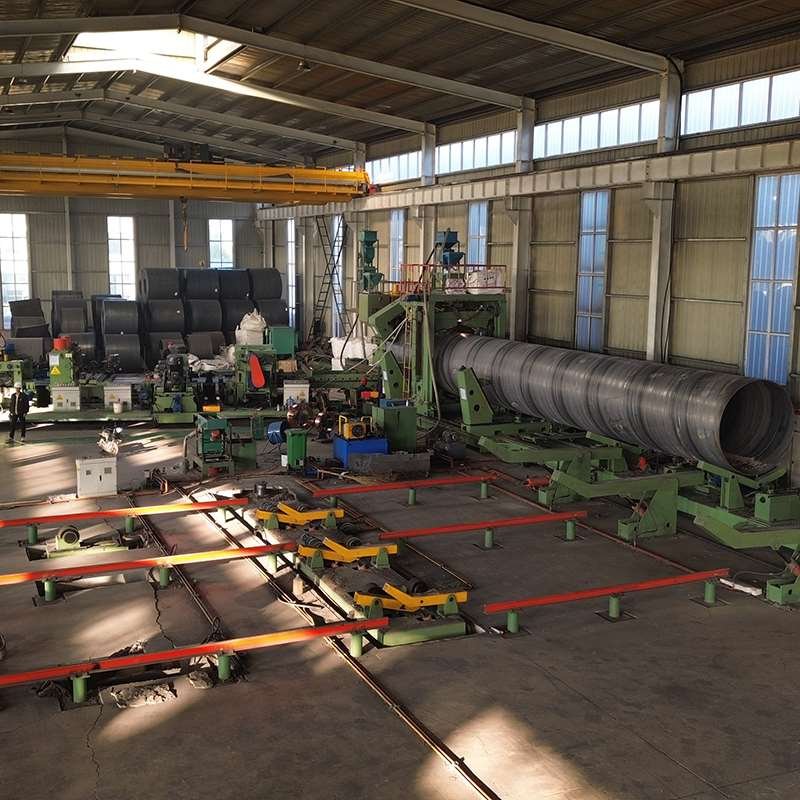
Steel coil is inspected, uncoiled and levelled, then fed through a forming station at an angle so the strip closes into a helical cylinder. The continuous seam is welded by submerged arc welding from the inside and the outside. The pipe is cut to length, the weld is examined by non-destructive testing, and each length receives a hydrostatic test before lining and coating are applied. Because the strip width is fixed but the forming angle can be changed, one coil width can produce several diameters — the main source of the route’s flexibility.
The seam is longer than a straight longitudinal seam on the same pipe length, and it runs at an angle to the pipe axis. That geometry distributes stress along the helix and is one reason the route performs well under internal pressure in large diameters. It also means weld quality and NDT coverage are central to the specification; they should never be left as an unspecified mill practice.
II. Where It Fits, and Where It Does Not
Spiral welded pipe is at its best on long, large-diameter, moderate-to-high flow lines: raw water transmission, municipal distribution mains, treatment plant inlet and outlet lines, pump station headers, cooling water and dredging. For these applications the design reference on Southeast Asian projects is commonly AWWA C200 with AWWA M11, with AWWA C205 for cement mortar lining and C206 for field welding, subject always to the owner’s specification and edition.
It is not the automatic answer for high-pressure oil and gas trunk lines with severe design conditions, where the owner may call for a longitudinal welded or seamless product under API 5L / ISO 3183. Nor is it the default for small-bore station piping, where the economics reverse. A realistic take-off often contains both: SSAW for the main, and a separate line for small-bore items. Keeping them apart avoids applying one standard system to the whole bill of quantities.
III. The Specification Decisions That Actually Matter
Outside diameter is set by design flow, velocity, pump capacity and future expansion — not by a preference for a larger number. Wall thickness is driven by internal pressure plus external loads: burial depth, traffic, soft soil, groundwater, lifting, backfill and differential settlement, alongside any corrosion allowance the designer requires. Pipe end configuration then controls field fit-up, lining termination, external joint coating and the hydrostatic test method. These three decisions should be fixed before a price is requested.
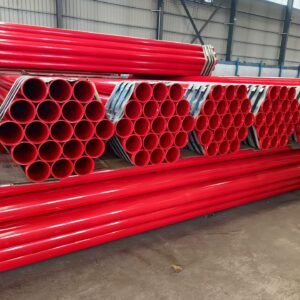
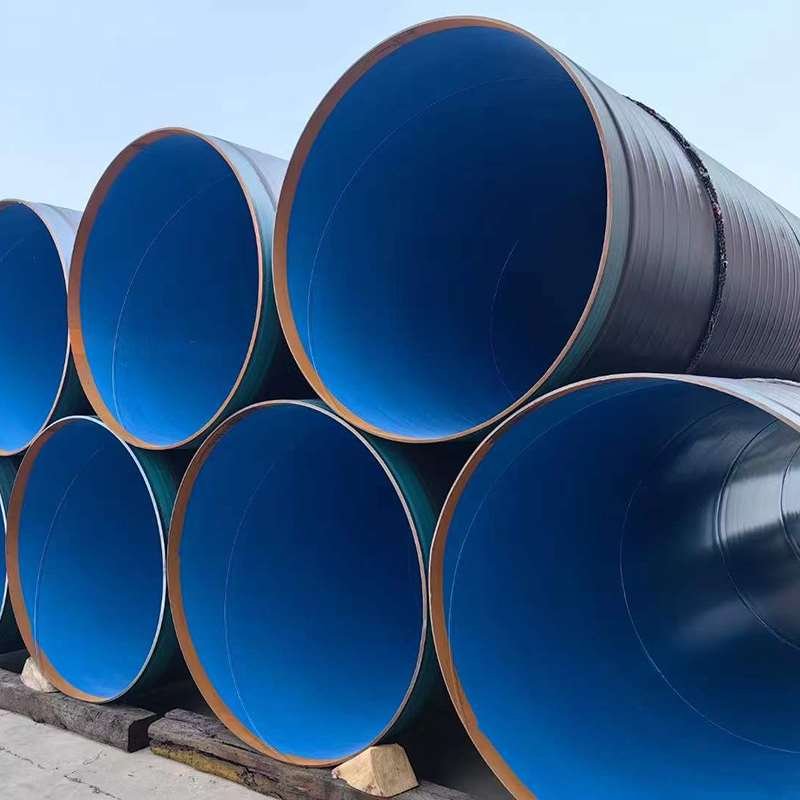
Internal and external protection are separate decisions again. For municipal water, cement mortar lining is normally the first internal option to evaluate, with lining thickness, curing, pipe-end termination and field joint restoration written into the technical agreement. External protection follows the installation environment: a paint system for above-ground sections, a specified coating for conventional burial, and 3PE where long buried runs, wet soil or handling abrasion justify the additional mechanical protection.
IV. Southeast Asian Project Conditions
Regional conditions change the specification more than the pipe route itself. Coastal and island alignments bring salt-laden air, high groundwater and low-lying flood-prone ground, so buoyancy control during construction and backfill protection belong in the design. Monsoon rainfall shortens the window for trench work and field testing, which favours sectional testing and phased delivery that follows the laying sequence.
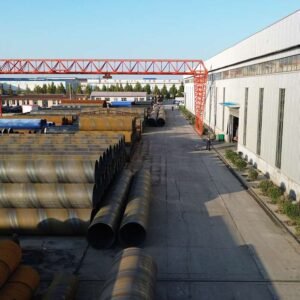
Logistics is a design input too. A large-diameter pipe may move by ocean freight, port transfer, barge leg and a second lift at site; single-pipe length and weight must clear the destination port, road turning radii and site crane capacity. Shorter lengths mean more girth welds, more lining restoration and more field joint coating. On ADB- or World Bank-funded work the ITP, MTC format and third-party witness points should be agreed before production so the document set is auditable per pipe.
V. Advantages and Limits at a Glance
| Aspect | Advantage | Limit to recognise |
|---|---|---|
| Diameter range | Large OD from a fixed coil width | Small bore is usually uneconomic |
| Length | Flexible single-pipe length | Constrained by port, road and site lifting |
| Weld | Helical seam distributes stress | Longer seam needs defined NDT coverage |
| Water service | Pairs with cement mortar lining | Lining at field joints must be restored |
| Protection | External system selected to environment | Joint coating is the weakest link |
| Standards | AWWA C200 / M11 for water mains | Not a substitute for API 5L line pipe |
VI. Summary
Spiral welded pipe earns its place on large water mains through diameter flexibility and delivered cost, not through being universally superior. Fix the diameter from hydraulics, the wall thickness from pressure and external loads, the ends from the field joining method, and the internal and external protection from the actual environment. Youcheng supplies spiral welded steel pipe from OD 219 mm to 3800 mm, with large-diameter spiral steel pipe for major transmission schemes and cement mortar lined steel pipe for water service. For a project-specific selection note, contact our team.