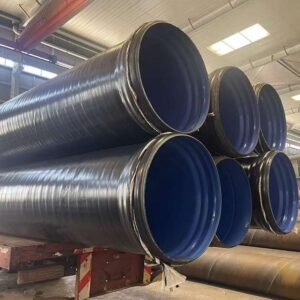
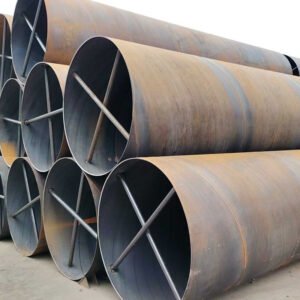
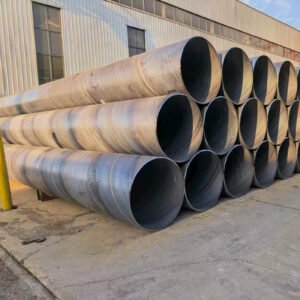
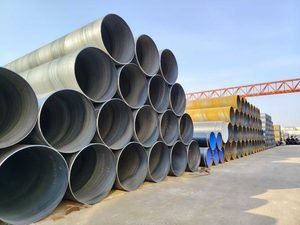
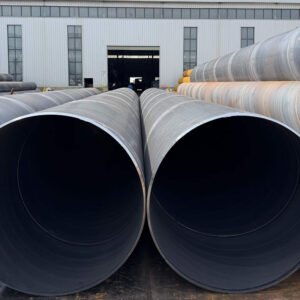
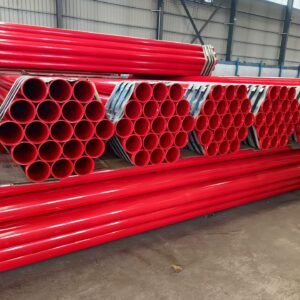
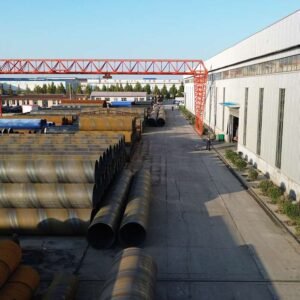
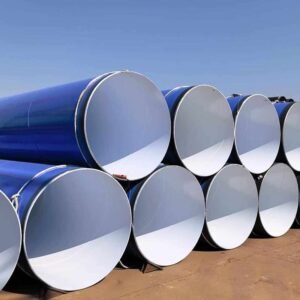
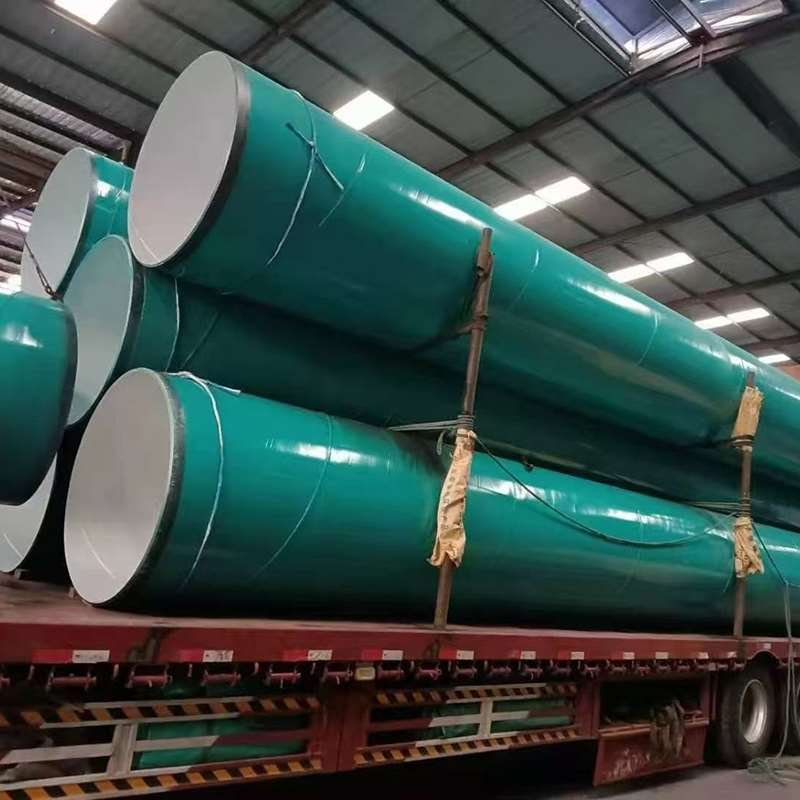
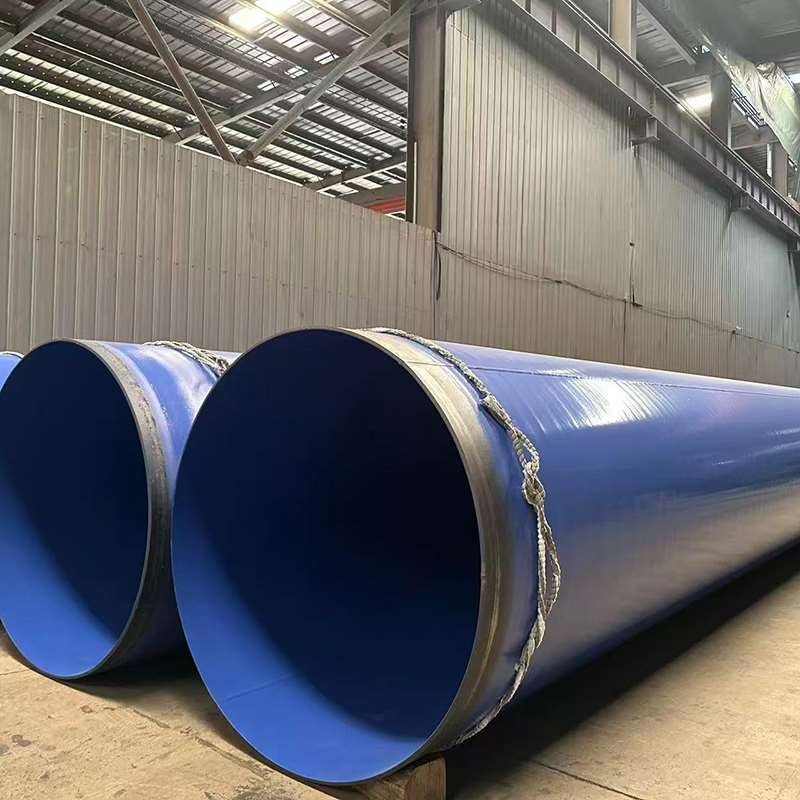
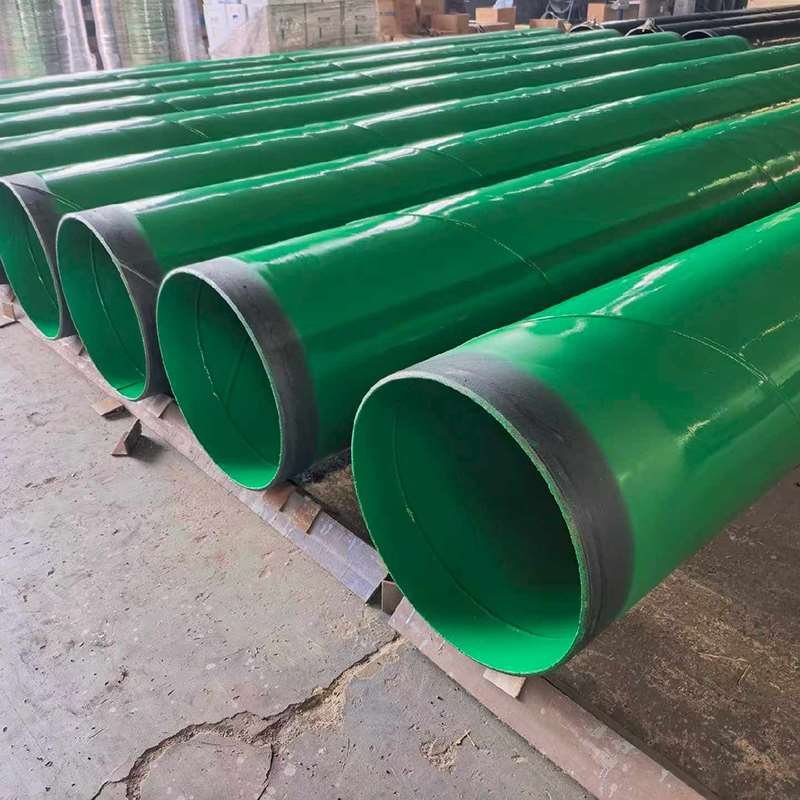
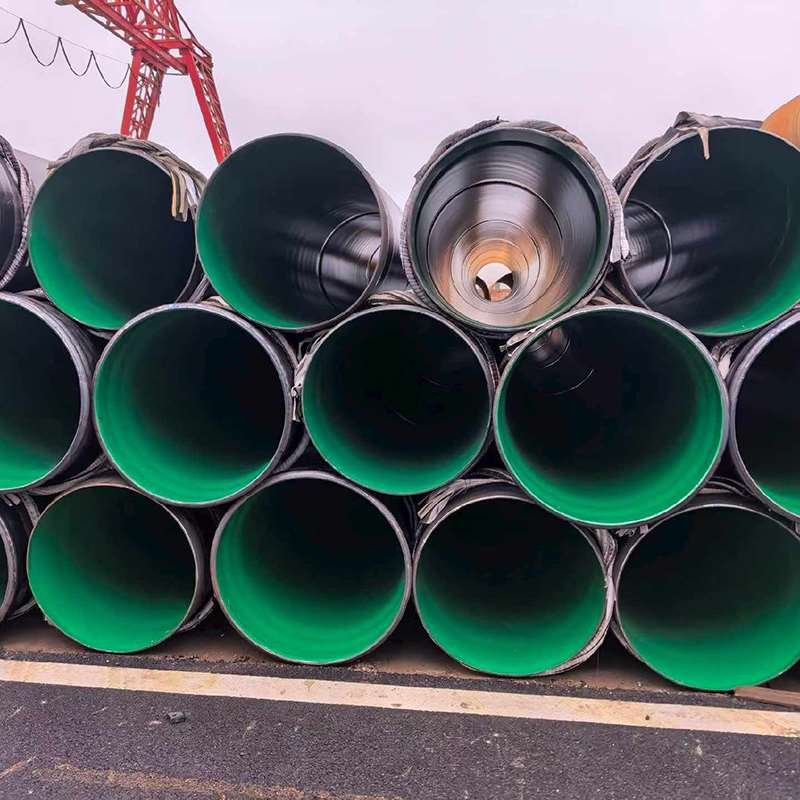
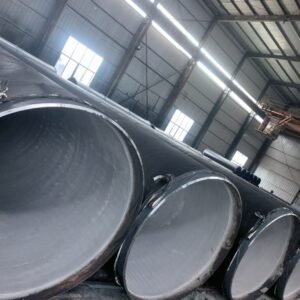
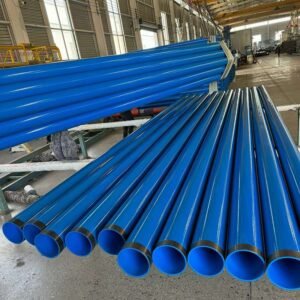
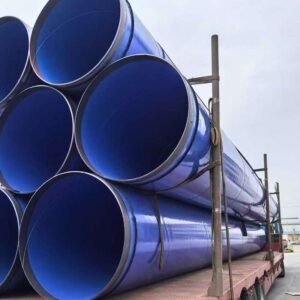
Epoxy coated spiral welded pipe combines large-diameter spiral submerged arc welded (SSAW) steel pipe with liquid-epoxy coating, lining, or both. The system is designed for water transmission, treatment plants, pump stations, drainage, and buried infrastructure where a large-diameter pipe needs corrosion protection on the bore, the exterior, or both surfaces.
This page is specifically about liquid-epoxy coated SSAW pipe. It is distinct from fusion-bonded epoxy powder pipe: liquid epoxy is a chemically cured coating system that can be shop-applied or field-applied, making it practical for large-diameter spiral-welded pipe, specials, fittings, and field-joint restoration.
Liquid-Epoxy System on Spiral Welded Pipe
| System Element |
Requirement |
| Base pipe |
SSAW / spiral welded steel pipe with verified seam quality, dimensions, and traceability |
| Epoxy type |
Two-part chemically cured liquid epoxy system, as specified by the project |
| Coating position |
Internal lining, external coating, or dual-side protection |
| Application location |
Shop-applied, field-applied, or a coordinated combination |
| Standards |
ANSI/AWWA C210:2024 or project-specified liquid-epoxy standard |
| Interfaces |
Straight pipe, bends, tees, reducers, flanges, welded joints, and repair areas |
A liquid-epoxy system may use an epoxy primer with one or more topcoats, multiple coats of the same epoxy, or another approved system defined by the project coating specification. The approved manufacturer system, surface preparation, film thickness, cure, and inspection requirements control acceptance.
Typical Pipe Scope
| Item |
Typical Scope |
| Manufacturing Method |
SSAW / double-sided submerged arc welded spiral pipe |
| OD Range |
219 mm – 3000 mm, subject to production and coating-line confirmation |
| Wall Thickness |
Selected by pressure, external load, corrosion allowance, and installation method |
| Length |
Standard or fixed length subject to transport and site installation plan |
| Pipe Standard |
AWWA, API 5L, ASTM, EN, GB/T, or project-specified standard |
| End Options |
Beveled, flanged, or hemispherical spigot and socket joints |
| Coating Scope |
Internal, external, or dual-side liquid epoxy |
Where Epoxy Coated Spiral Welded Pipe Fits
Municipal Water Transmission
Large-diameter SSAW pipe with internal liquid-epoxy lining can be used for raw-water mains, treated-water transmission, plant connections, and pumping systems. The internal lining is specified to protect the bore and support a controlled flow surface; the external coating is selected separately for soil, groundwater, or atmospheric exposure.
Treatment Plants and Pump Stations
Treatment plants use bends, tees, reducers, flange connections, manifolds, and other special sections in addition to straight pipe. Liquid epoxy is useful because the same approved system can be applied to large pipe, fabricated specials, and repair locations under a coordinated procedure.
Buried and Underwater Water Infrastructure
For buried or underwater steel water pipe, liquid-epoxy coatings and linings may be specified under AWWA C210:2024. The project must still define surface preparation, coating thickness, external environment, water quality, field-joint restoration, and handling requirements.
Why Spiral Welded Pipe Needs a Joint-Control Plan
The spiral seam is completed and inspected before coating. The coating then protects the pipe surface but cannot correct an unresolved weld defect. In the field, circumferential installation welds, fittings, pipe ends, and repair areas must be restored with a compatible liquid-epoxy system to maintain coating continuity.
| Interface |
Control Requirement |
| Spiral seam |
Verify weld/NDT and surface condition before coating |
| Pipe ends |
Define coating holdback or termination for the selected joint type |
| Field weld |
Clean, prepare, feather adjacent epoxy, and apply the approved restoration system |
| Fittings and specials |
Include them in the same coating schedule and inspection plan as the straight pipe |
| Repair areas |
Use compatible materials and retain repair/inspection records |
Liquid Epoxy vs. Epoxy Powder vs. 3PE
| System |
Primary Position |
Key Difference |
| Epoxy coated spiral welded pipe |
Liquid epoxy on large-diameter SSAW pipe, specials, and field interfaces |
Shop/field application and repair flexibility for water infrastructure |
| Epoxy powder coated steel pipe |
Fusion-bonded epoxy powder, internal/external/dual-side |
Heat-applied powder process for steel water pipe and fittings |
| FBE coated steel pipe |
External single-layer FBE for line pipe |
Oil and gas external-corrosion positioning under ISO 21809-2 |
| 3PE coated SSAW pipe |
SSAW pipe with three-layer external PE system |
FBE primer + adhesive + PE topcoat; external protection only |
Application and Quality Control
- Surface preparation – Remove contaminants and prepare the steel to the approved profile before liquid epoxy is applied.
- Mixing and application – Control material batch, mix ratio, pot life, environmental conditions, and application method.
- Cure and thickness – Verify curing and dry-film thickness for internal and/or external coating scope.
- Continuity and adhesion – Perform holiday detection, adhesion, and other project-specified tests.
- Specials and field joints – Apply the same approved coating logic to fittings, weld joints, interfaces, and repairs.
- Exposed-service review – For visible outdoor pipe, confirm whether a UV-resistant topcoat is needed; unprotected epoxy can chalk in exposed service.