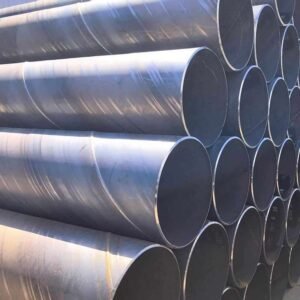
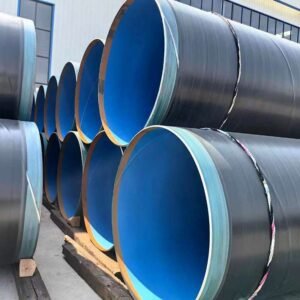
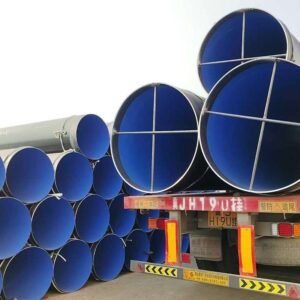
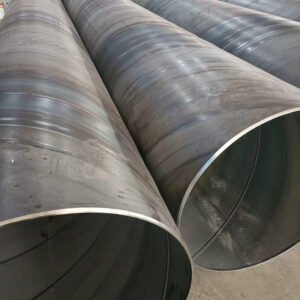
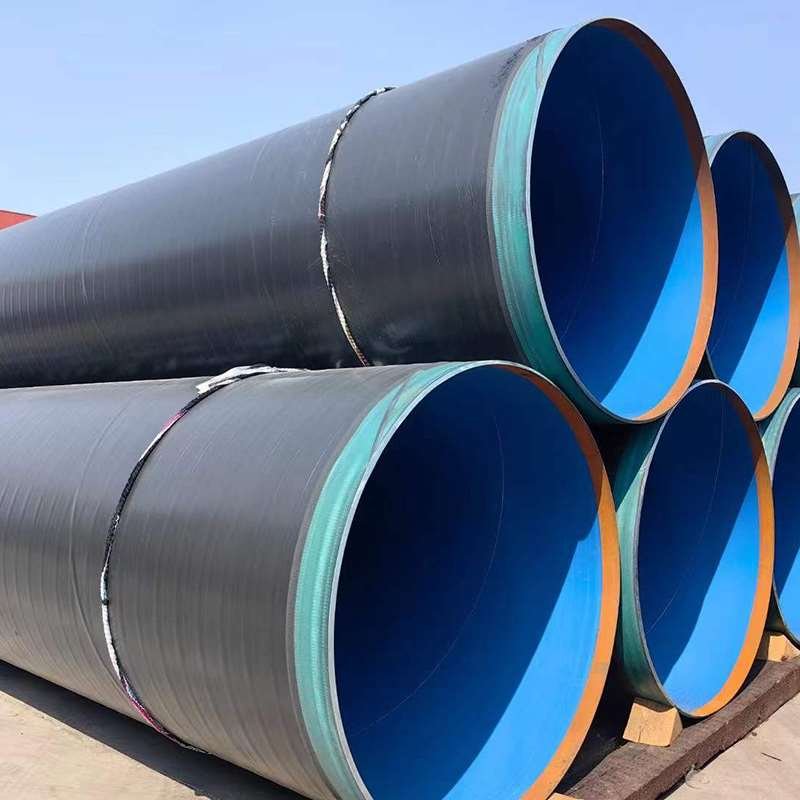
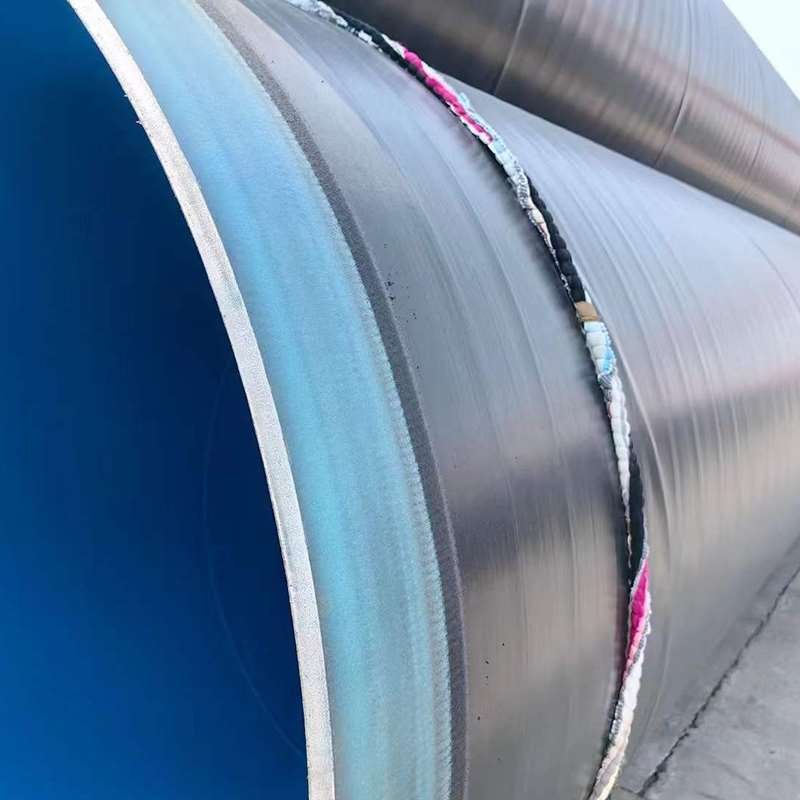
DIN 30670-compliant 3PE corrosion-resistant spiral-welded steel pipes (SSAW) have become a globally recognized industry benchmark due to their exceptional corrosion resistance and mechanical strength.
By combining the structural advantages of spiral-welded submerged-arc-welded steel pipes (SSAW) with the German DIN 30670 standard for three-layer polyethylene (3PE) corrosion protection, these pipes can achieve a service life of over 50 years even in harsh soil conditions.
I. What Is the DIN 30670 Standard for 3PE Corrosion Protection?
DIN 30670 is a technical standard developed by the German Institute for Standardization (DIN) governing the factory application of polyethylene (PE) coatings on steel pipes. The 3PE corrosion protection system consists of three layers of materials with distinctly different functions:
- Base Layer: Fusion-bonded epoxy powder (FBE, ≥60–150 μm)
This layer chemically bonds directly to the steel pipe surface, providing core corrosion resistance and protection against cathodic delamination. - Intermediate Layer: Copolymer Adhesive (AD)
Acts as a “bridge” layer, firmly bonding the epoxy powder base coat to the outer polyethylene layer. - Outer Layer: High-Density Polyethylene (HDPE)
Provides strong mechanical protection against impacts, moisture, and UV damage during transportation, storage, and backfilling.
II. Technical Requirements for 3PE-Coated Spiral-Welded Steel Pipes (SSAW)
Due to their low production costs for large diameters and flexible specifications, spiral welded steel pipes (SSAW) are the preferred base pipes for long-distance water and gas transmission projects. When manufactured in accordance with the DIN 30670 standard, the following mandatory requirements must be met:
- Coating Thickness Standards
According to DIN 30670, the minimum total coating thickness depends on the pipe diameter. The following are reference values for Standard Type (N) corrosion protection:
| Nominal Diameter (DN) | Steel Pipe Wall Thickness (mm) | Minimum Total Coating Thickness (mm) |
|---|---|---|
| ≤ DN 100 | Standard wall thickness | ≥ 1.8 mm |
| DN 100–DN 250 | Standard wall thickness | ≥ 2.0 mm |
| DN 250–DN 500 | Standard wall thickness | ≥ 2.2 mm |
| DN 500–DN 800 | Standard wall thickness | ≥ 2.5 mm |
| ≥ DN 800 | Standard wall thickness | ≥ 3.0 mm |
Note: For the reinforced type (S), the thickness requirement is typically increased by approximately 0.5 mm.
- Surface Preparation
The base pipe must undergo shot blasting for rust removal prior to coating application. Surface cleanliness must meet Grade Sa 2.5, and the anchor pattern depth is typically controlled between 40 and 100 μm to ensure coating adhesion.
III. Key Performance Tests Under the DIN 30670 Standard
To ensure that 3PE-coated spiral steel pipes meet project export specifications, they must pass the following rigorous tests:
- Peel Strength Test: At 20 ± 5 °C, the peel strength must be no less than 35 N/cm; and must remain above 15 N/cm even in a high-temperature environment of 50 °C.
- Electrical Spark Testing (Holiday Detection): The entire pipe is scanned using a high-voltage electrical spark tester (typically set to 25 kV) to ensure the coating is free of pinholes and leaks.
- Impact Resistance: Ensure that the coating does not crack or peel off when subjected to an impact of a specific joule energy—this is critical for field operations.
- Elongation at Break: The polyethylene layer must possess extremely high flexibility (typically no less than 600%) to accommodate terrain variations during pipeline installation.
IV. Why Are 3PE Spiral-Welded Pipes the Preferred Choice for Projects in the Middle East (UAE/Saudi Arabia)?
- In regions such as the United Arab Emirates and Saudi Arabia, where soil salinity is high and diurnal temperature fluctuations are significant, the requirements for pipelines are extremely demanding:
- Resistance to Extreme Corrosion: The 3PE coating effectively isolates the spiral welds from erosion caused by high-salinity groundwater.
- Temperature resistance: The DIN 30670 standard covers operating environments ranging from -45°C to 80°C, making it perfectly suited for desert climates. Cost-effectiveness: SSAW spiral pipes are more price-competitive than seamless pipes in large-diameter projects (such as seawater desalination transmission pipelines).