Short answer. PSL1 and PSL2 are two product specification levels in API 5L, the line pipe standard, and PSL2 is the stricter one. PSL2 tightens chemical composition, sets both a minimum and a maximum strength, makes Charpy impact testing mandatory and requires non-destructive testing of the weld. PSL1 is the base level for less demanding lines. Youcheng manufactures SSAW and can supply to API 5L PSL1 or PSL2.
The points that change price and inspection scope:
| Aspect | PSL1 | PSL2 |
|---|---|---|
| Chemical control | Basic composition limits | Lower P and S, CE limit, tighter alloy control |
| Tensile properties | Minimum yield and tensile only | Minimum and maximum yield; yield-to-tensile ratio capped |
| Impact test | Not mandatory for the grades and wall thicknesses to which the requirement applies | Mandatory Charpy V-notch at stated temperature and energy |
| Weld NDT | Only if the purchaser specifies it | Required by the standard |
| Traceability | Basic records | Full heat-to-pipe traceability |
| Typical use | Low-pressure water and less critical transmission lines | Higher-pressure, critical and toughness-controlled lines |
- PSL1 is the base product level in API 5L; PSL2 is the stricter level, so the suffix has to appear on the purchase order and mill certificate rather than only in a catalogue title.
- Chemistry: PSL1 applies basic composition limits; PSL2 adds lower phosphorus and sulfur maxima, a carbon equivalent (CE) limit and tighter control of micro-alloying elements.
- Strength: PSL1 lists a minimum yield and tensile strength; PSL2 gives a yield range with both lower and upper bounds and caps the yield-to-tensile ratio.
- Impact testing: PSL1 has no mandatory Charpy test for the grades and wall thicknesses to which the requirement applies; PSL2 calls for Charpy V-notch testing at a stated temperature and absorbed energy for the grade.
- Inspection and traceability: PSL1 carries out NDT only when the purchaser specifies it and keeps basic records; PSL2 requires non-destructive testing of the weld and full heat-to-pipe traceability.
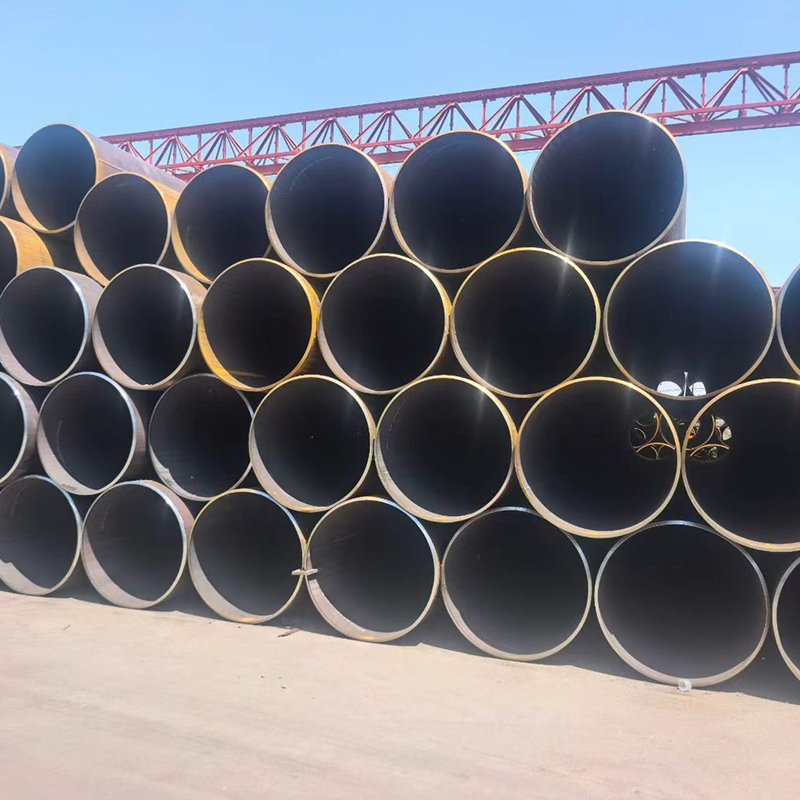
PSL1 still earns its place on low-pressure water and less critical transmission lines. Where the grade, wall thickness and service do not call for toughness control or full weld NDT, PSL1 to a named grade meets the design basis without the added test scope PSL2 brings. Moving every line to PSL2 by default raises inspection cost where the operating conditions do not need it. Choose the level from the design conditions of the line.
Settle the level when the line is designed. Moving from PSL1 to PSL2 after a quotation has gone out changes the steel chemistry, the test programme and the inspection hold points, so both price and schedule move with it. A PSL is never named on its own: it needs a grade such as X42, X52 or X60, and the edition of API 5L named in the specification is the one that governs.
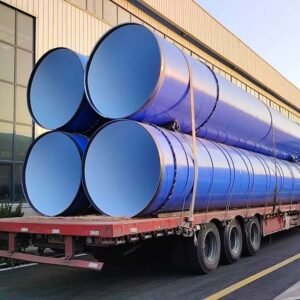
For the background on the level itself, read PSL2 pipe definition, process and applications. Youcheng’s SSAW is formed from coil into a helix and welded inside and out; see what is spiral welded (SSAW) pipe and the SSAW product page. Supply runs to OD 219–3800 mm; large-diameter spiral steel pipe gives the range, and hydrostatic test covers the pressure check.
Send the grade, PSL level, OD, wall thickness and pressure class and we will confirm the supply and test scope. Enquiries by WhatsApp or email to sean@youchengpipe.com.