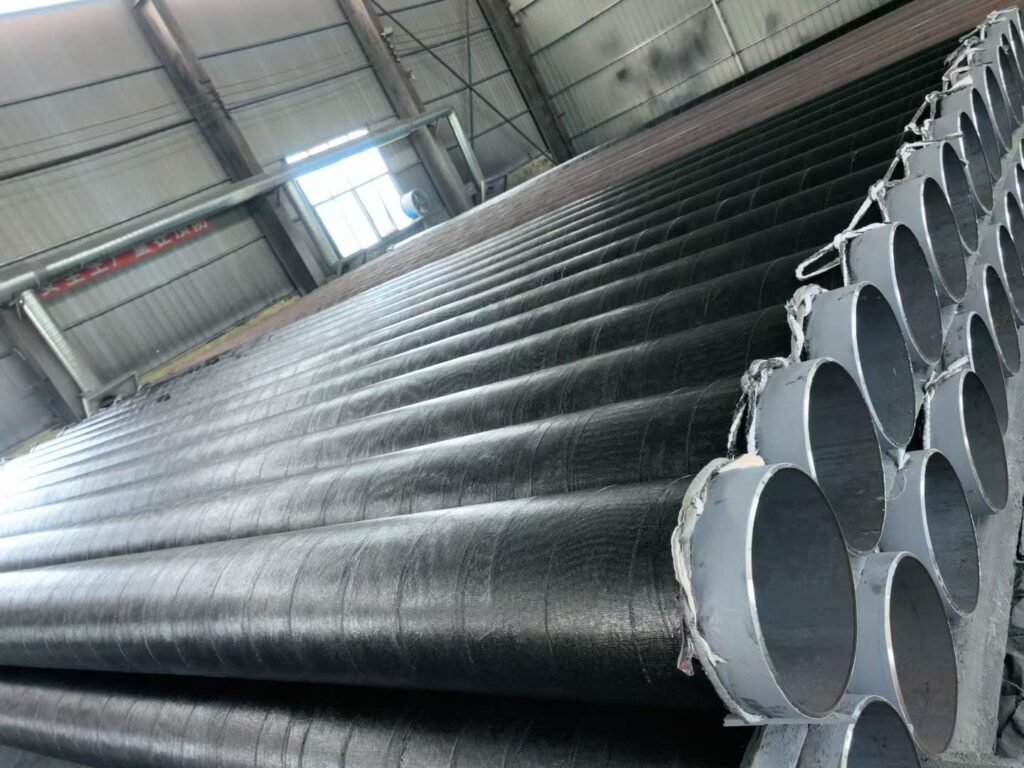
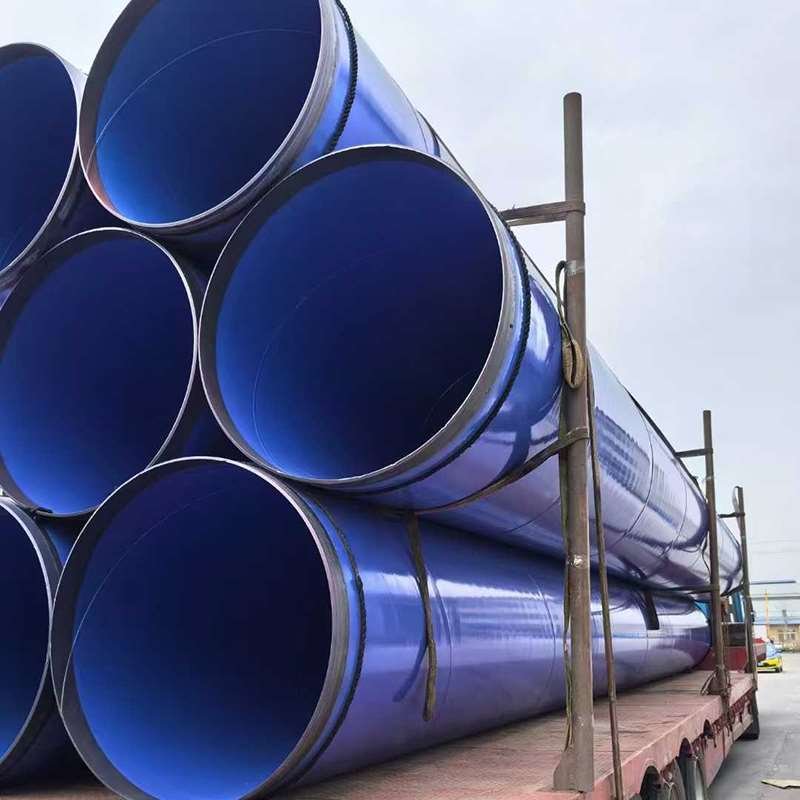
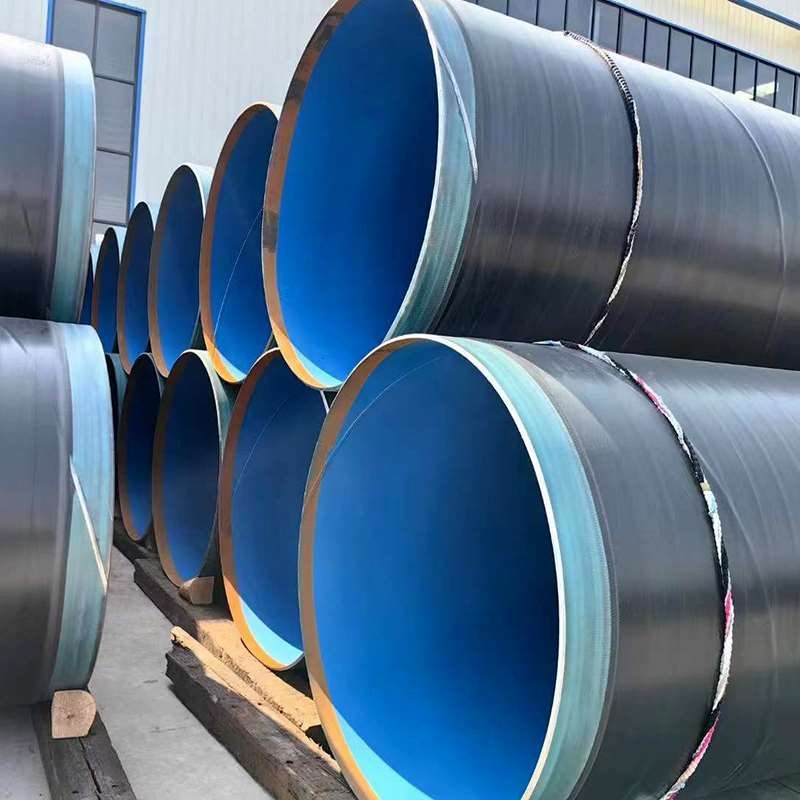
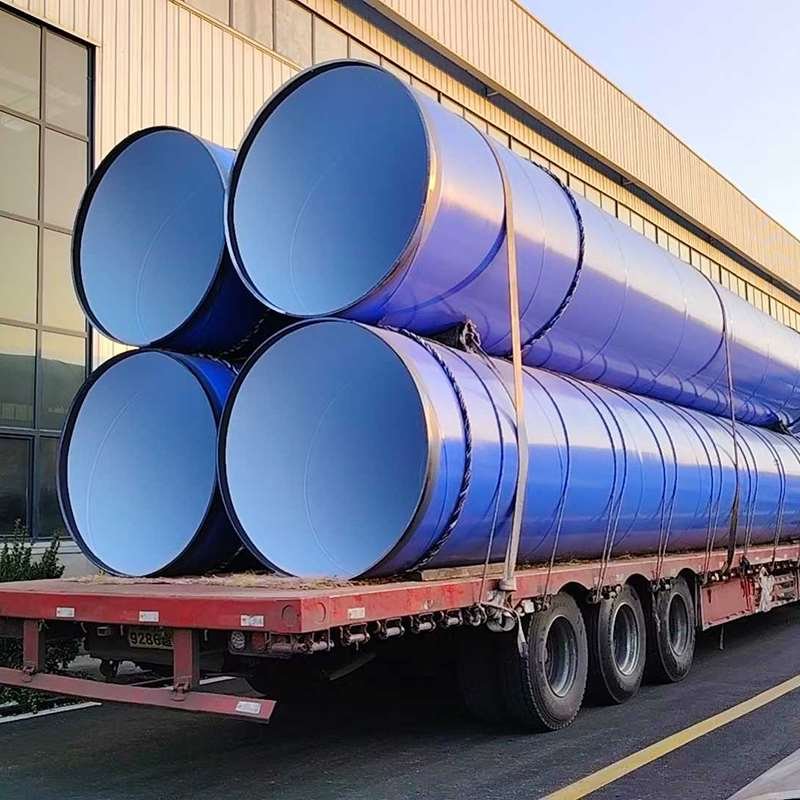
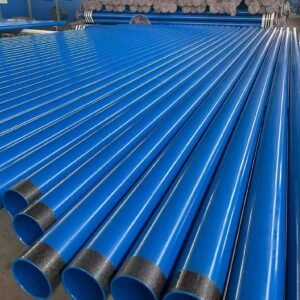
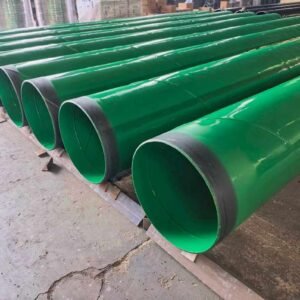
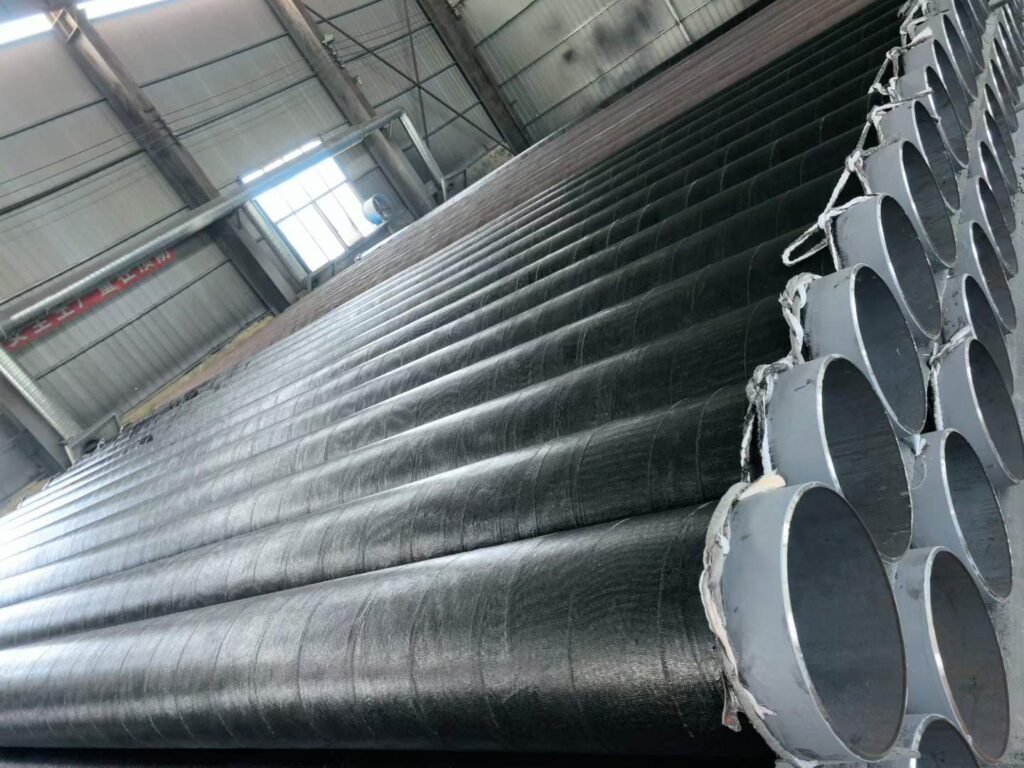
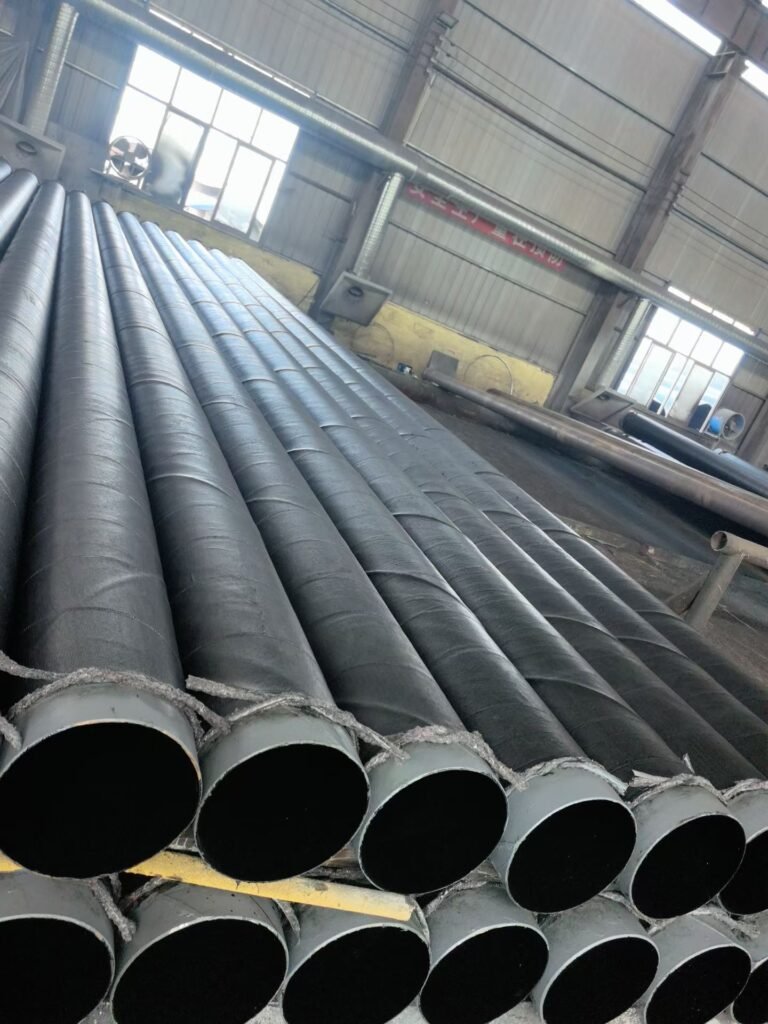
Not every buried main can justify a three layer polyethylene system. On a rural transmission line with a modest budget, a short design life, and a route that is unlikely to be disturbed, an epoxy coal tar coated pipe remains a rational choice. It is also the coating most often applied badly, because it is perceived as simple: mix, brush, done. The difference between a coal tar system that lasts twenty years and one that fails in three lies in surface preparation, coat intervals and thickness control.
I. What the System Is
poxy coal tar coatings combine epoxy resin with coal tar, producing a coating with good water resistance, good adhesion to properly prepared steel, and a cost per square metre below polyolefin systems. They are typically applied as a primer and one or more build coats, with the number of coats and the total thickness set by the specification rather than by the applicator’s judgement.
As a pipeline anti corrosion coating for buried service, the system performs well in consistently wet, low-oxygen ground. It performs less well where the coating is exposed to sunlight, where mechanical damage is frequent, or where the operating temperature is high.
II. Where It Belongs and Where It Does Not
It belongs on buried lines with moderate handling, on crossings where a weight coat will be applied over it, and on projects where the owner’s maintenance regime is simple and the design life is realistic. It does not belong on above-ground sections, on lines that will be repeatedly re-handled through a barge transfer, or on pipe that will be stored outdoors in the sun for months.
A buried anti corrosion pipe specification using coal tar should therefore say explicitly that the coating is for buried service, and should require a different system for any above-ground length. Mixing the two on one route without a transition detail is a common and avoidable error.
III. Comparing Coal Tar With 3PE on Cost and Life
Three failures dominate. The first is surface preparation: coal tar epoxy needs a blasted surface, and a wire-brushed surface will produce a coating that looks continuous and disbonds at the first wet-dry cycle. The second is coat interval: too long between coats and the layers do not bond; too short and solvent is trapped. The third is thickness: a single heavy coat is not equivalent to two specified coats.
All three are controllable and all three are cheap to record. For an external coating steel pipe order, requiring the applicator to log blast grade, ambient conditions, interval between coats and wet-film or dry-film thickness per length costs almost nothing and removes most of the risk.
IV. Summary
Use coal tar for buried, moderate-handling routes; write blast grade, coat number and thickness into the clause; and never let it stand in for an above-ground system. Youcheng supplies 3PE coated SSAW steel pipe, spiral welded steel pipe and cement mortar lined steel pipe. Related: anti-corrosion pipe for coastal stations and 3LPE for provincial mains. Send your route and design life and we will compare systems on cost per year. Related reading: plastic coated steel pipe; 3LPE coated steel pipe; PSL2 pipe definition; 3PE coated SSAW steel pipe. Related reading: plastic coated steel pipe; 3LPE coated steel pipe; PSL2 pipe definition; 3PE coated SSAW steel pipe.