Single versus double FBE on a buried water main
On a buried water transmission main in East Africa, the specification often arrives with one line about external protection: fusion-bonded epoxy, with a wall thickness chosen to cover pressure and external load. The question that follows is whether one epoxy layer is enough or a second layer should be added. This note works through the thickness class, the joint build and the point at which a second layer is worth adding, so the coating arrives as specified.
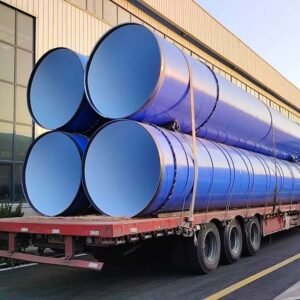
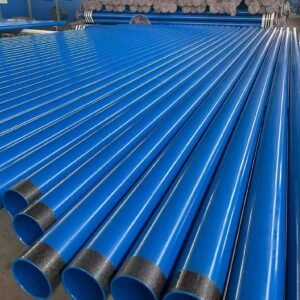
FBE is a dry epoxy powder applied electrostatically to blast-cleaned, heated pipe and cured into a continuous film. It is specified to AWWA C213 for water service. The film bonds chemically to the steel, so surface preparation and pipe temperature at application matter more than the thickness figure printed on the order. We list FBE coated steel pipe and epoxy powder coated steel pipe as two product entries for the same fusion-bonded epoxy process on the same spiral welded body.
The labels cause more confusion than the coating itself. S-FBE means a single epoxy layer applied in one pass. D-FBE, written DFBE or double FBE, means a second epoxy layer applied over the first to build a heavier film. These are descriptive shop terms. Some specifications use them as if they were standard grades, so ask what the buyer means by the abbreviation and confirm the film thickness class against the governing standard before pricing. The distinction is different from the epoxy base layer inside a 3PE system.
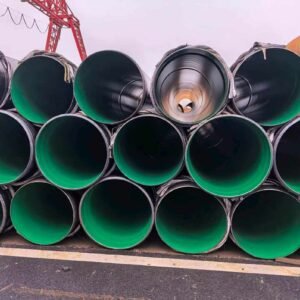
FBE here is an external system. On a potable water main the bore is protected separately, commonly with a cement mortar or epoxy lining applied in the shop, following AWWA C200/M11 practice for the steel water pipe. We supply cement mortar lined steel pipe for that duty. Keep the two specifications apart in the order: the external coating fights the soil, the lining handles the water, and a holiday test on the outside says nothing about the inside. Merging them into a single coating line is a common source of scope gaps.
Adhesion, impact and the case for a second layer
Both systems rely on the same bond to prepared steel. A second epoxy layer leaves that bond unchanged and adds film build, which buys resistance to gouge and impact during handling, transport and stony backfill. That is why double FBE tends to be requested on thicker-wall, large-diameter pipe, where the lengths are heavy and the coating takes more knocks before it is buried. On a well-drained trench with controlled, fine backfill, a single layer to the standard thickness class usually performs. Film builds commonly specified for FBE sit in the few-hundred-micron range; treat any figure as an indicative range and confirm the class against AWWA C213 before reading it as an offer.
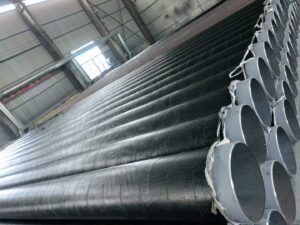
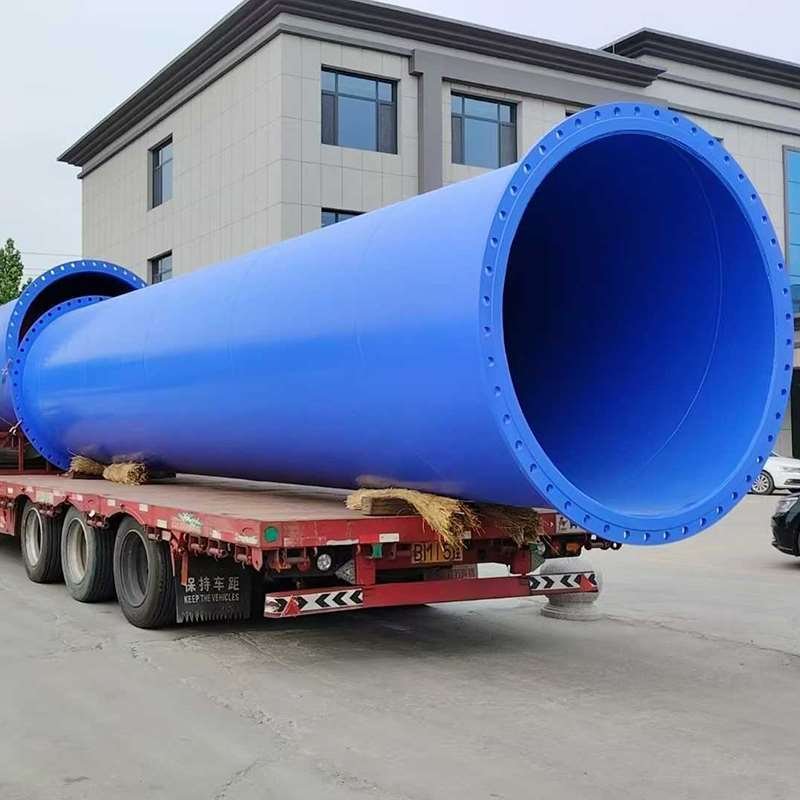
For the pipe body, Youcheng manufactures SSAW. Large buried water mains in OD 219–3800 mm are supplied as epoxy coated spiral welded steel pipe, and the diameter range is covered by our large diameter spiral steel pipe line. LSAW is a comparison point only. If wall thickness is being raised to handle pressure, keep the coating decision separate: adding a second epoxy layer addresses handling damage, while internal pressure is taken by the wall.
Field joints, mistakes and clause wording
The coating stops at the weld. A double-FBE main repaired at the joint with a single-layer product ends up with the thinnest film exactly where the pipe is most disturbed. Write the joint repair system and its thickness into the same clause as the mainline coating. Require holiday detection over both plant coating and joints before backfill, and define pipe-end cutback and bevel preparation on the drawing.
Three mistakes show up in the enquiries we handle. Ordering double FBE without a thickness class, so the two layers have no defined build. Treating S-FBE as a lower grade when it is a single-layer option suited to a controlled trench. And checking the factory film while leaving the joint repair untested. On thickness questions, the standard requirements are the reference we send; for the wider choice between epoxy and polyethylene systems, see our comparison of FBE and 3PE.
Single FBE versus double FBE at a glance
| Item | Single FBE (S-FBE) | Double FBE (D-FBE / DFBE) |
|---|---|---|
| Layer structure | One epoxy layer, one application | Epoxy base plus a second epoxy layer |
| Film build | Standard thickness class to AWWA C213 (indicative range) | Heavier build, thickness class stated in the spec |
| Adhesion | Chemical bond to blast-cleaned steel | Same base bond; the extra layer adds film thickness only |
| Impact and gouge resistance | Adequate with controlled, fine backfill | Better against stony backfill and handling damage |
| Field joint repair | Single-layer FBE or liquid epoxy | Matched build carried over the joint |
| Typical use | Well-drained trench, moderate handling | Thicker-wall, large-diameter pipe, rougher handling |
Putting it in the order
State the governing standard and thickness class, then say in plain words how many epoxy layers are required and what the abbreviation in the drawing means. Match the joint repair to that build. Require adhesion and holiday test records against pipe numbers, and set lining and coating inspection as hold points before loading. Get that right and single FBE or double FBE becomes a defined deliverable rather than a line item open to interpretation.
To review an S-FBE or DFBE requirement against your trench and wall thickness, contact us on WhatsApp or at sean@youchengpipe.com. Send the diameter range, wall thickness, backfill conditions and the coating wording from the specification.