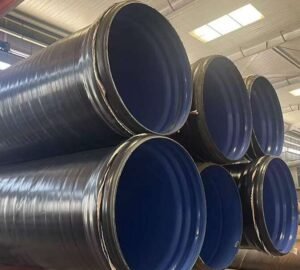
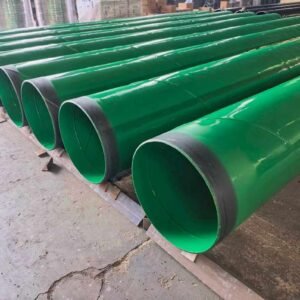
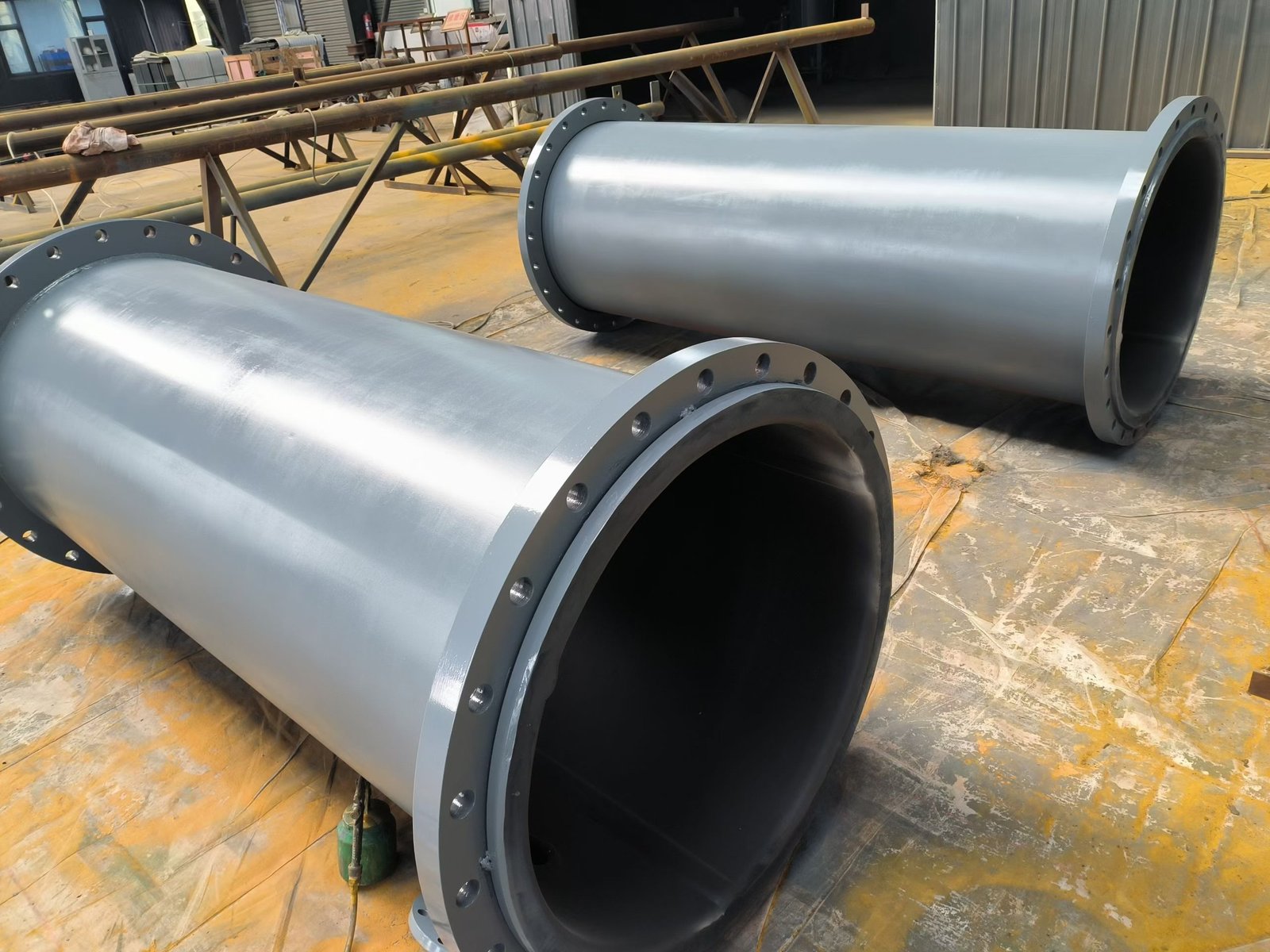
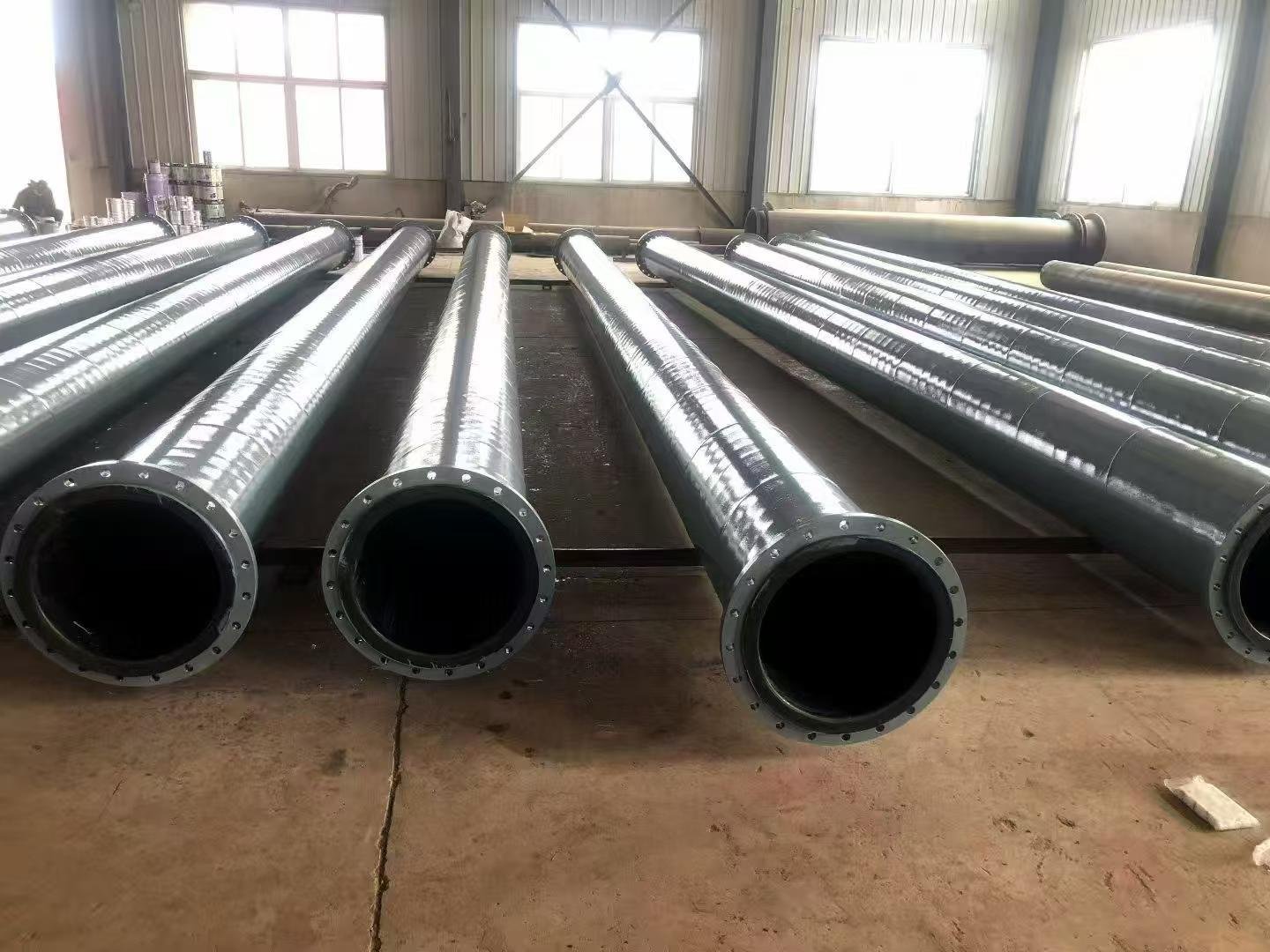
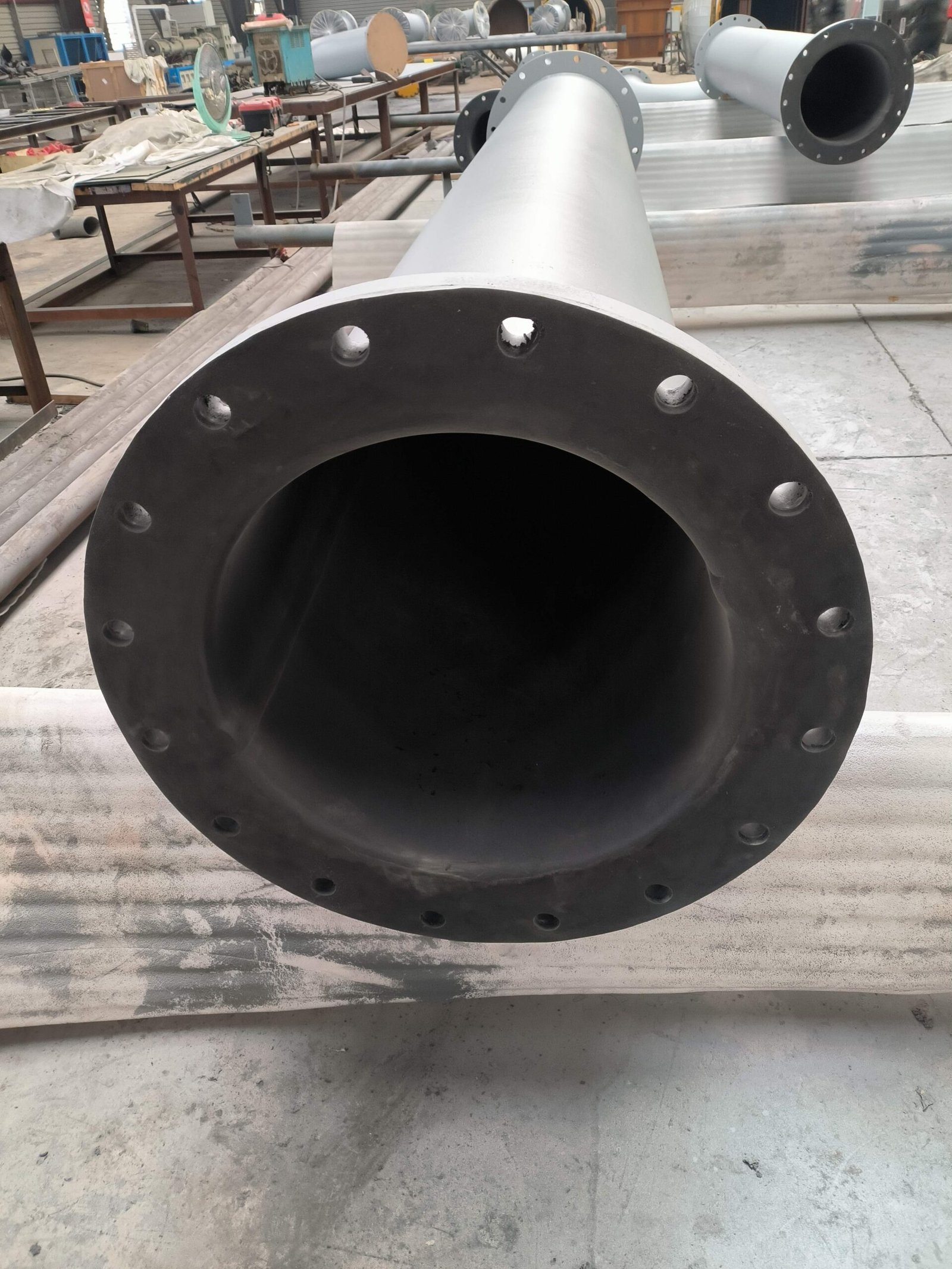
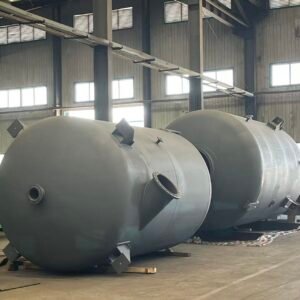
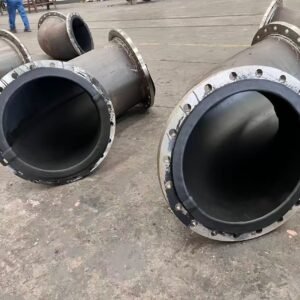
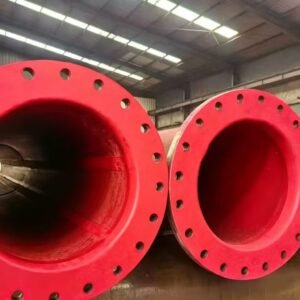
Rubber lined steel pipe combines a steel pressure pipe shell with a bonded elastomeric lining on the bore. The steel pipe provides structural strength and pressure capacity; the rubber lining protects the inside surface against abrasion, erosion, impact, corrosion, or a combination of these service conditions.
Rubber lined pipe is commonly used for mineral slurry, tailings, dredging slurry, ash handling, flue-gas desulfurization (FGD), chemical process streams, and other high-solids or chemically aggressive services. It is not a substitute for cement-mortar lined water pipe, plastic coated water pipe, or 3PE external oil-and-gas pipe.
Rubber Lining Materials Must Match the Service
| Lining Family |
Typical Strength |
Typical Selection Driver |
| Soft natural rubber |
Strong resilience and abrasion/tear resistance |
Slurry, tailings, dredging, and impact/abrasion service |
| Hard natural rubber / ebonite |
Higher hardness and chemical/permeation resistance |
Defined chemical-duty and harder-service conditions |
| Chloroprene / neoprene |
General chemical resistance and weathering properties |
Chemical/process service where specified |
| Butyl / chlorobutyl |
Resistance for selected chemical environments and permeation control |
Acidic or gas/permeation-sensitive duties when specified |
| EPDM |
Suitable for selected water, steam, and chemical applications |
Medium compatibility and temperature requirement |
| NBR / nitrile |
Resistance for selected oil-bearing service |
Hydrocarbon-related or oil-contact conditions when compatible |
Rubber grade cannot be selected from the name of the fluid alone. The purchaser must provide solids type and size, concentration, flow velocity, temperature, pressure, chemical composition, pH, and expected operating cycle. The lining manufacturer must confirm compound compatibility before release.
Typical Product Scope
| Item |
Requirement to Confirm |
| Steel pipe shell |
Standard, grade, OD, wall thickness, pressure rating, and fabricated specials |
| Lining material |
Natural rubber, hard rubber, neoprene, butyl, EPDM, NBR, or approved compound |
| Lining thickness |
Set by abrasion, impact, particle size, pressure, and service-life requirement |
| Lining scope |
Straight pipe, bends, tees, reducers, valves, spools, and fittings as required |
| Connection |
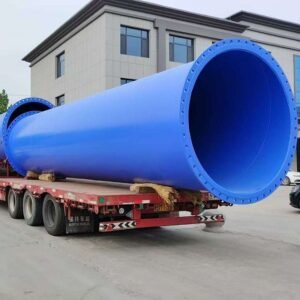
Flanged, grooved, coupling, or project-specified connection system |
| External protection |
Paint, epoxy, 3PE, or project-specified external system separate from internal lining |
| Inspection |
Visual, thickness, spark/continuity where applicable, bond/adhesion, dimensional and pressure tests |
Slurry, Tailings, and Mining Applications
In slurry systems, the lining must absorb impact and resist sliding abrasion from solids. The pipe selection should consider particle hardness, maximum particle size, solids percentage, velocity, bends, elevation changes, pump pressure, and shutdown/startup cycles. Bends, tees, reducers, and pump-adjacent spools often receive the highest wear and should be specified as a complete lined system rather than as straight pipe only.
For mining projects, define the replacement strategy as well as the original pipe. Spool length, flange orientation, lifting points, lining inspection access, and spare sections can control maintenance downtime more effectively than the initial pipe price.
Dredging, Ash, and FGD Service
Rubber lined steel pipe is used in dredging and ash/slurry handling where abrasion and impact dominate. In FGD and chemical duty, the selection shifts toward compatibility with the actual chemical environment, temperature, permeation risk, and maintenance practice. Do not assume that a rubber grade suitable for abrasive slurry is also suitable for a hot or chemically aggressive FGD stream.
Fabrication, Lining, and Connections
- Steel fabrication – Manufacture and inspect pipe, bends, reducers, tees, flanges, and attachment details before lining.
- Surface preparation – Blast-clean the bore and prepare it for the approved bonding system.
- Lining installation – Apply rubber sheet or another approved lining method; roll and seal joints to eliminate trapped air and weak interfaces.
- Curing / vulcanization – Cure the lining under the approved process for the selected compound and component geometry.
- Inspection – Inspect lining continuity, joints, thickness, defects, and bond as specified.
- Protection and shipment – Protect lined ends and flanges; prevent impact, bending stress, point loading, and contamination.
Rubber-lined pipe should generally be fabricated and lined to final configuration before service. Field welding after lining can damage the lining and must not be assumed unless a qualified repair and restoration procedure is approved.
Connections and Field Maintenance
| Connection / Interface |
Lining Requirement |
| Flanged connection |
Common option for lined slurry systems; protects the lining termination and supports dismantling for maintenance |
| Mechanical coupling |
Use only where pressure, movement, seal material, and liner termination are compatible |
| Welded connection |
Requires a defined pre-lining spool design or a qualified field-restoration plan; do not weld casually after lining |
| Bends and specials |
Require the same lining compound and inspection standard as straight pipe, often with higher wear allowance |
| Repairs |
Use approved repair material/procedure and re-inspect the restored area before return to service |
Rubber Lining vs. Other Pipe Protection Systems
| System |
Primary Job |
Best-Fit Service |
| Rubber lined steel pipe |
Internal abrasion/erosion and chemical protection with resilient lining |
Slurry, tailings, dredging, FGD, high-solids process fluids |
| Cement mortar lined steel pipe |
Internal water-service protection |
Municipal and raw-water transmission |
| Epoxy or plastic coated steel pipe |
Internal/external corrosion protection for water/industrial fluid |
Water, fire water, drainage, and defined industrial fluids |
| 3PE coated steel pipe |
External corrosion and mechanical protection |
Buried/submerged oil, gas, and water line pipe |
| Ceramic lined pipe |
High-hardness wear protection |
Severe, more predictable sliding-abrasion service where brittleness is acceptable |